Oil Change DIY Versus Going to a Shop
When you think about oil change DIY or going to a shop, it is a simple car maintenance decision. A DIY oil change or engine oil change at home can help you save money because you avoid automotive labour costs. This gives you good labour cost savings and a strong cost-saving opportunity. You can also look for oil purchase discounts and choose the right engine oil grade based on the manufacturer’s recommended oil.
But DIY needs proper garage tools, basic car tools, and some mechanical skills. It also takes time, which is your time investment. Another important thing is the use of engine oil disposal. You must take it to a hazardous waste disposal or waste drop-off location to protect environmental safety and support oil recycling.
On the other hand, a professional oil change at a shop is easier. A trained person does the work using the right process. This makes service vs DIY simple: DIY is cheaper, but a mechanic service is safer and faster for most people.
Where to Get an Oil Change

If you choose a shop, there are three main automotive service options:
- Dealership service: They use OEM parts (original equipment manufacturer parts) and follow exact company rules. They often give a good service warranty, but the high service cost is a downside.
- Independent garage: A local shop that offers good service at a fair price. It is a popular choice for smart vehicle servicing.
- Franchise outlet: These shops are fast and easy to find. Prices are usually moderate, and service is quick.
If you are in Bolton, Ontario, Canada, you can visit Shahs Spa and Tire Lube for reliable and affordable service.
When to Get an Oil Change
Knowing the right time is important for a healthy car. Your oil change frequency depends on your driving conditions and maintenance schedule.
Most cars need an oil change every 8000 km or every six months. Many modern cars have an oil life monitor that shows a dashboard alert when it’s time.
You should always check your owner’s manual guidance for correct motor oil selection, including full synthetic vs conventional oil and the right viscosity rating, like 5W-30. This helps improve oil durability, better oil performance, and strong engine protection. Also, remember that the lifespan of synthetic oil is longer than that of conventional oil, so it may need fewer changes.
Following this schedule supports a good vehicle maintenance routine and strong car care best practices.
Real-Life Experience
One car owner tried a DIY oil change at home to save money. They had basic car tools, but made a small mistake while tightening the filter. A few days later, they noticed that oil was leaking. Then they visited Shahsspaandtirelube in Bolton, Ontario, Canada.
The team fixed the issue quickly and used the correct oil based on the owner’s manual guidance. After that, the car ran smoothly with better engine protection. This shows that while DIY can save money, professional service gives peace of mind.
📞 Call now to book your oil change: +1 (905) 805-1414
How to Save Money on an Oil Change
Saving money on an oil change is easy if you follow some smart steps. These simple tips help you get good oil change savings without harming your car.
Do It Yourself (DIY Oil Change)
A DIY oil change is the best way to save money on an oil change. You don’t pay an hourly labour rate, so your total cost is low. This is a great cost reduction strategy for people who like to do their own car maintenance.
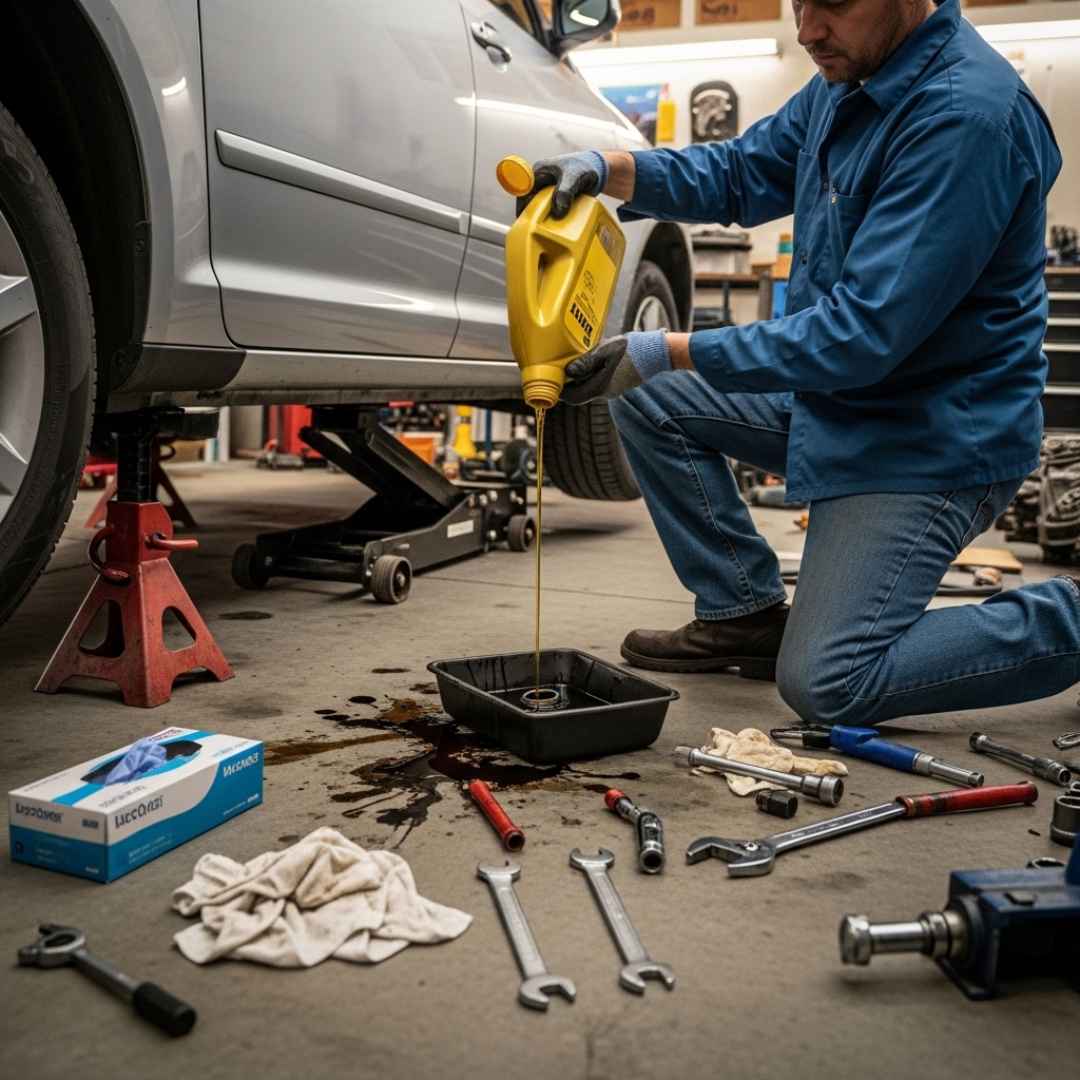
You will need basic oil change tools like an oil drain pan, jack stands, an oil funnel, and filter pliers. Some people also use tools like a torque wrench, breaker bar, or lug wrench. You will also need engine oil supply, oil filter supply, protective gloves, and paper towels.
Bring Your Own Oil and Filter
Many shops allow you to bring your own oil and bring your own filter. In this case, they only charge for labour-only service, which gives a reduced service cost. This is a smart way to get a budget oil change.
Look for Deals and Discounts
Always search for engine oil deals and discounts on engine oil. You can find good prices through retail auto stores or online oil purchases. Many shops follow oil price rotation with weekly discounts, so you can buy oil at a lower price.
You can also try bulk buying oil during sales. This helps in long-term oil change savings.
Choose the Right Oil
To save money, use the cheapest engine oil that meets your car’s needs. Always check viscosity grade requirements and use SAE-certified oil. Good store-brand motor oil from private-label oil manufacturers also follows proper oil quality standards and oil certifications.
Some oils include oil additives like anti-wear additives, detergents, dispersants, and corrosion inhibitors for better high-temperature resistance and engine care. You only need premium oil selection or performance oil if your car really needs it, like in high-speed driving or high-mileage engine oil situations.
Use a Reusable Oil Filter
A reusable oil filter or a lifetime oil filter can reduce costs over time. With proper oil filter reuse, you don’t need to buy a new filter every time.
Avoid Upsells
Always avoid upsells. Some shops use service upselling tactics to sell unnecessary repairs like extra fluids or parts. Be careful with any fluid replacement suggestion, air filter replacement, or cabin air filter change.
Do a quick cost comparison filter replacement—many of these are simple maintenance tasks you can do at home, like compressed air cleaning.
Follow the Maintenance Schedule
Check your owner’s manual guidance and follow the correct maintenance schedule and service intervals. This helps you avoid extra costs and improves upsell awareness.
Stay Alert for Hidden Costs
Be careful of hidden costs, automotive fraud risk, and very cheap services with loss leader pricing. Always choose shops with good service transparency, strong customer awareness, and proper automotive service ethics.
Real-Life Experience
One driver in Bolton, Ontario, Canada, wanted to save money on an oil change. First, they went to a very cheap shop, but the staff pushed many unnecessary repairs and extra services. The bill became much higher than expected.
Next time, they visited Shahsspaandtirelube. They brought their own oil and asked for only labour-only service. The team followed proper service transparency and did only what was needed. The driver saved money and felt confident. This shows that smart choices give real oil change savings.
📞 Call now to book your oil change: +1 (905) 805-1414
Oil Change Pricing
Oil change pricing depends on many simple things like where you live, what car you drive, and what oil you choose. These are called cost factors, and they directly affect the total automotive service cost.
[How much charge for oil change] In Ontario, the average conventional oil change usually costs around $35 to $75, while a synthetic oil change charges about $65 to $125. This is a normal price variation based on location-based pricing, vehicle type, and oil type selection.
The labour rate also changes from shop to shop. This creates labour cost differences between a professional garage, service centre, or dealership. Some places like NAPA AUTOPRO offer standard pricing, and some dealerships may offer a price match policy. To get the best deal, people often ask for oil change quotes and do a price comparison.
Another part of pricing is oil filter replacement. Most cars need a filter change every oil change or every second one, depending on the filter change interval and maintenance schedule. This also affects the final vehicle-specific pricing.
DIY Oil Change
A DIY oil change (do-it-yourself maintenance) is a way to reduce cost by doing home garage repair. It helps remove labour fees, so you only pay for motor oil purchase and basic supplies.
For a DIY job, you need:
- Oil change tools like a drain pan, a funnel, and gloves
- Around 5L of engine oil, depending on your car
- Basic maintenance skills
- Proper DIY instructions from an oil change guide
This method is a great cost-saving option and helps you manage your maintenance budget better. It also improves your engine maintenance knowledge and overall automotive maintenance understanding.
However, you still need to follow the correct steps and check your vehicle-specific requirements.
For expert help, people can also visit NAPA Auto Parts or ask for automotive expert advice from professionals.
Real-Life Experience
One driver in Bolton, Ontario, Canada, compared both options. First, they went to a dealership for an oil change and found the cost was high due to labour and oil change service charges. Later, they tried a DIY oil change at home using basic tools and saved money because they only paid for oil and a filter.
But the next time, they visited Shahsspaandtirelube. The team explained the correct oil type selection, checked the filter, and completed the service quickly. The driver said it was easier and safer than DIY while still affordable.
This shows that both DIY and professional services can work, depending on your needs.
📞Get your oil changed now by calling: +1 (905) 805-1414
Great Canadian Oil Change is Shahsspaandtirelube
Great Canadian Oil Change is Shahsspaandtirelube, which means it represents the same type of fast and reliable oil change service, and in Bolton, Ontario, Canada, the trusted local name people rely on is Shahsspaandtirelube, known for simple, honest, and proper vehicle care.
Real-Life Experience
One driver in Bolton needed an oil change quickly. They heard about big service places, but instead they went to Shahsspaandtirelube. The staff checked the car properly, changed the oil step by step, and made sure everything was done safely. The driver said the service felt easy to understand, smooth, and the car ran better after the visit.
📞 Book your oil change now: +1 (905) 805-1414
Cost by Car Type
The oil change cost depends on the car type, engine oil capacity, and engine oil type.
- Passenger cars:
These have a low price because they need less oil quantity (about 3–5 litres). This is common in small passenger cars. - SUVs:
These have an average price because of higher midsize SUV oil capacity (5–7 litres). This is called an SUV oil cost increase. - Trucks:
These have a high price due to the large truck oil capacity (6–10+ litres). This is known as a truck oil cost increase. - European vehicles:
These cost more because of strict European car oil requirements, special oil specification standards, and manufacturer requirements.
👉 This creates an oil change pricing difference in overall vehicle pricing.
At Shahsspaandtirelube in Bolton, Ontario, Canada, we provide affordable and clear pricing for all cars, SUVs, trucks, and European vehicles.
📞 Book now: +1 (905) 805-1414
How Much Oil Do You Need?
Each vehicle has a different engine oil capacity (this is called oil capacity variation).
- Passenger car engine capacity: 3–5 litres
- Midsize SUV oil capacity: 5–7 litres
- Truck oil capacity: 6–10+ litres
Your owner’s manual shows the exact oil quantity based on vehicle model examples.
Engine Oil Types
Common engine oil types include:
- 0W-20 oil
- 5W-20 oil
- 5W-30 oil
- Synthetic motor oil gives better oil durability and oil performance improvement
- Conventional motor oil is cheaper but needs more frequent changes
👉 Synthetic oil benefits also help with oil change frequency reduction.
How Do I Know When Oil Needs to Be Changed?
1. Oil Change Timing
Follow your vehicle maintenance schedule:
- Check mileage milestones
- Monitor the odometer reading
- Follow proper maintenance intervals
2. Warning Signs
- Maintenance reminder or windshield service reminder
- Engine noise or rough performance
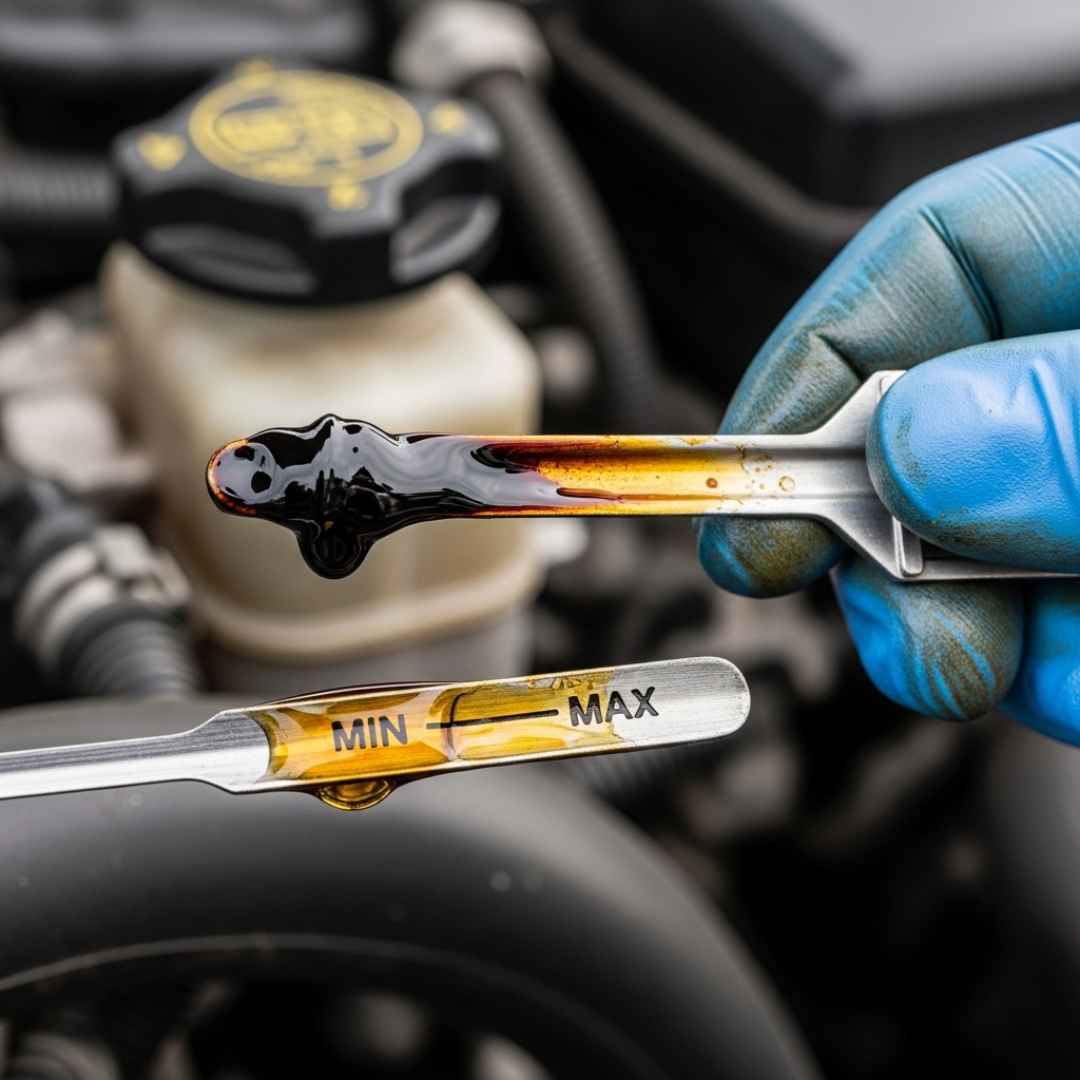
3. Oil Dipstick Check
- Use the oil dipstick check
- Do oil level monitoring
- Check oil color:
- Clean = OK
- Black = dark oil warning
- Thick = possible sludge detection
4. Regular Monitoring
- Perform an oil condition check
- Do an oil top-up if needed
- Watch for oil change indicators
Why Oil Change Matters
- Improves engine protection
- Supports engine health monitoring
- Keeps the engine clean and smooth
Good vehicle maintenance habits help with:
- Proper maintenance records
- Easy service interval tracking
- Better warranty validation
- Strong resale value maintenance
Real Life Experience
A customer visited Shahsspaandtirelube in Bolton, Ontario, with a truck. He ignored his oil change indicators and didn’t follow his automotive care schedule. His oil became very dark, showing a clear dark oil warning, and early sludge detection was found.
After a proper oil change and setting up his vehicle maintenance schedule, his engine improved. Now he follows regular engine maintenance and keeps track of his maintenance intervals.
For a reliable oil change guide, proper engine maintenance, and fair oil change cost:
📍 Visit Shahsspaandtirelube – Bolton, Ontario, Canada
📞 Call Now: +1 (905) 805-1414
Book your service today
Which Oil Should I Use?
Always check your owner’s manual for the correct manufacturer recommendation. It tells you the right owner manual oil grade, SAE viscosity grade, and API service classification.
Look for:
- API certification mark or starburst symbol
- This shows it meets the ILSAC GF-6A engine protection standard and fuel economy requirements set by the International Lubricant Specification Advisory Committee
Oil Standards
- API SN, API SN Plus, API SP (for gasoline engine oil)
- ILSAC GF-5, ILSAC GF-6
- These follow oil classification standards and have backward compatibility
Some vehicles also need Dexos specification:
- dexos1 Gen 2, dexos1 Gen 3
- dexos2, dexos D (for diesel engine oil)
- Dexos R for performance oil standard
Oil Grade
Example: 5W-30 oil grade
- “5W” = winter viscosity rating (good cold start performance and low temperature flow)
- “30” = works at engine operating temperature with proper high-temperature viscosity
👉 This helps oil thickness stability, better lubrication efficiency, and smooth oil flow characteristics.
Choose oil based on climate-based oil selection:
- Cold areas → lower number (better cold weather protection)
- Hot areas → higher number (better oil pressure resistance)
Synthetic vs Conventional Oil
Conventional Oil
- Made from conventional base oil (API oil groups I and II)
- Breaks down faster due to the oxidation process and the hydrocarbon reaction
- Can cause:
- oil breakdown
- carboxylic acid formation
- oil acidity increases
- corrosion risk
- sludge formation and deposit buildup
- viscosity increase and oil degradation
- Made from synthetic base oil (Group III oil, Group IV PAO, Group V esters)
- Has better refined oil quality and strong oil formulation additives
Benefits:
- Higher synthetic oil durability
- Longer extended oil life
- Strong thermal stability and high temperature resistance
- Better cold flow performance and viscosity index improvement
- Fewer impurity resistance issues and better contamination control
- Smooth lubricant consistency and molecular uniformity
- Keeps engine cleanliness
👉 According to an AAA oil performance study, synthetic oil gives better fuel economy improvement and maintenance cost efficiency.
It also allows oil change interval extension, but short-trip driving impact can still cause moisture buildup and oil contamination.
Why Is an Oil Change So Important?
Oil is very important for your engine.
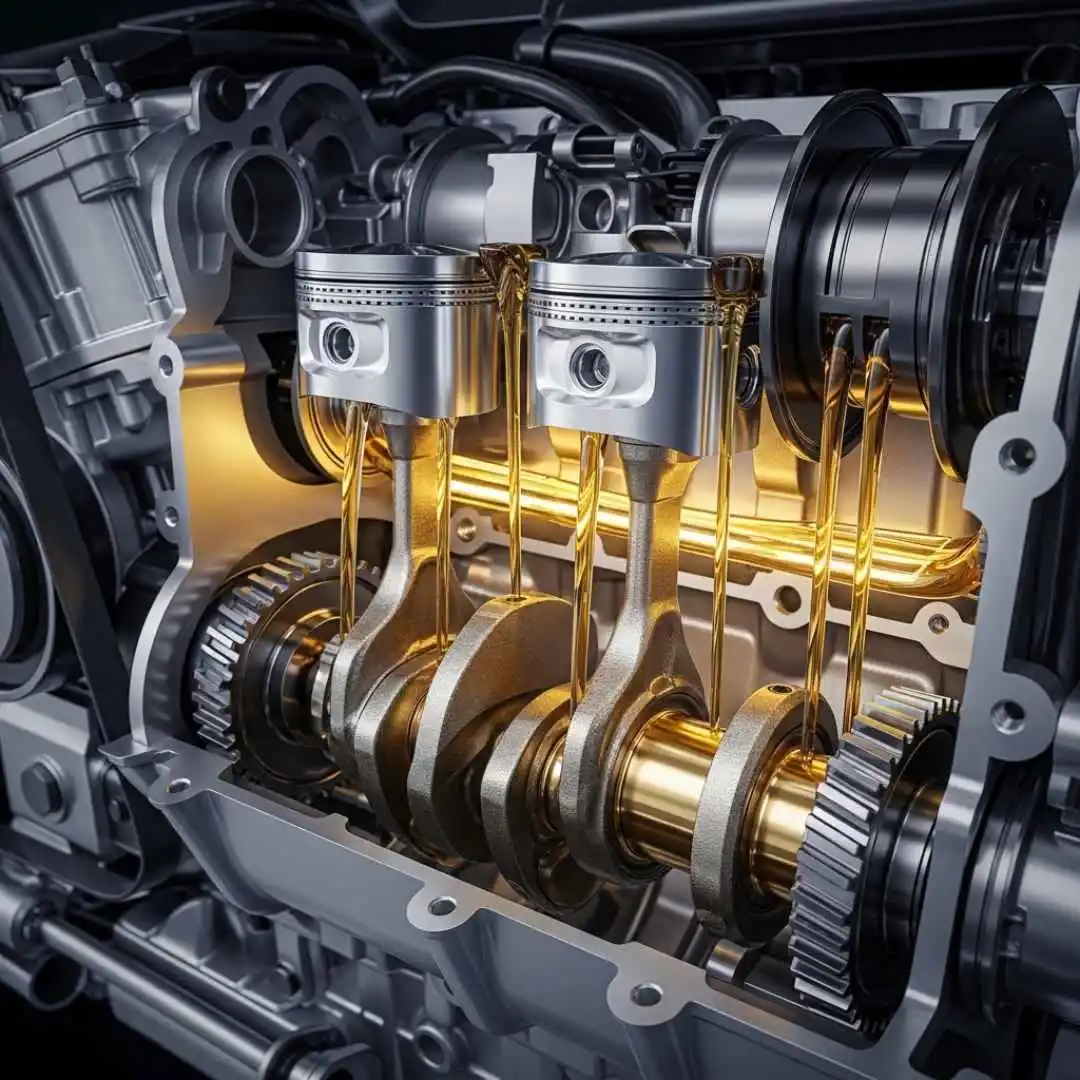
It helps in:
- Friction reduction and wear prevention
- Protecting parts with piston lubrication and valve protection
- Cooling engine with heat dissipation
- Cleaning engine with sludge removal, detergent additives, and dispersant additives
Over time, oil becomes dirty:
- Leads to oil replacement timing
- Affects engine efficiency and the full automotive lubrication system
Good oil change habits help:
- Proper engine maintenance importance
- Maintain warranty compliance
- Improve vehicle longevity
Real Life Experience
A customer came to Shahsspaandtirelube in Bolton, Ontario. He was using the wrong oil and not following his owner’s manual. Because of that, his engine had heavy sludge formation and oil contamination.
We changed his oil using the correct SAE oil grading system and proper API service classification. After that, his engine became smooth, and fuel use improved.
Now he follows proper oil replacement timing and takes care of his engine lubrication system regularly.
For expert oil service and better engine efficiency:
📍 Visit Shahsspaandtirelube – Bolton, Ontario, Canada
📞 Call Now: +1 (905) 805-1414
Book your oil change today and protect your engine
5 Reasons Why Oil Changes Are Important
- Engine Lubrication
Your car has many moving engine parts like pistons and valves. Oil helps in engine lubrication, giving friction reduction and wear prevention. This keeps your engine performance smooth. - Overheating Prevention
Without oil, engine friction increases and causes heat buildup. This can lead to engine failure risk. Oil helps in cooling and keeps the engine safe. - Removes Dirt and Sludge
Fresh oil has good oil transparency, but over time, it collects dirt. This leads to sludge formation, debris removal, and grime removal problems. Clean oil improves engine cleanliness. - Better Fuel Mileage
When the engine runs smoothly, it improves fuel efficiency, provides better fuel mileage, and reduces fuel consumption. - Keeps Warranty Valid
Regular oil changes are part of vehicle maintenance requirements. Skipping them can affect warranty validity and warranty coverage.
The oil change interval depends on modern vehicles, lubricant performance, and vehicle operating conditions.
- Normal use: 8000 to 12000 km interval
- Hard use: 5000 km severe condition interval
Follow your:
- Owner’s manual guidelines
- Manufacturer-recommended interval
- Maintenance schedule
Many cars have oil life monitoring systems using:
- Mileage-based maintenance
- Time-based maintenance
- Smart oil quality analysis
Driving Conditions Matter
Oil breaks down faster based on driving habits, impact, and oil breakdown rate, like:
- Short-distance driving
- Cold weather driving and freezing temperatures
- Engine idling and low-speed driving
- Rough roads, dusty roads, muddy roads, unpaved roads, gravel roads
- Salt spreads on roads and creates a corrosive environment
- Sandy areas
- Heavy traffic, driving, and going traffic
- High-temperature driving
- Uphill driving, downhill driving, mountain driving
- Towing trailers, roof rack usage, and commercial vehicle use
- High-speed driving
- Winter driving conditions
How to Check Oil
- Do an oil dipstick check
- Perform oil level inspection
- Check oil color:
- Amber oil color and translucent oil = good
- Dark = dark oil indicator and oil replacement needed
Use reminders like:
- Service reminder sticker
- Windshield maintenance sticker
- Scheduled maintenance tracking
Should You Choose Synthetic or Regular Oil?
There are two main engine oil types:
Conventional Oil
- Made from crude oil refining
- Uses oil additives
- Lower cost but shorter life
Synthetic Oil
- Made using synthetic oil composition and chemical oil formulation
- Better in oil performance comparison
- Longer synthetic oil lifespan
- Strong engine protection
- Better pollution reduction
- Works well in hot and cold weather
Difference
- Oil cost difference: Synthetic is more expensive
- Oil shelf life: both can last long if unused
- Oil expiration: usually around 5 years
Where Should You Take Your Car for an Oil Change?
You can go to trusted automotive service providers for a proper oil change service.
For the best and most reliable service in Canada:
👉 shahsspaandtirelube – Bolton, Ontario
We provide:
- Fast service
- Professional care
- Complete engine check
The best choice is:
👉 shahsspaandtirelube
We focus on quality, speed, and customer satisfaction.
Real Life Experience
A customer came to Shahsspaandtirelube in Bolton, Ontario. He ignored his oil change frequency and never checked his oil. His oil became very dark, showing a dark oil indicator, and sludge started building.
After a full oil change and proper maintenance schedule, his engine became smooth again with better engine smoothness and improved fuel use.
Now he follows his daily driving routine, tracks his long-distance driving, and never misses his oil service.
Keep your engine safe and strong with regular oil changes 🚗
📍 Visit Shahsspaandtirelube – Bolton, Ontario, Canada
📞 Call Now: +1 (905) 805-1414
Book your oil change today!
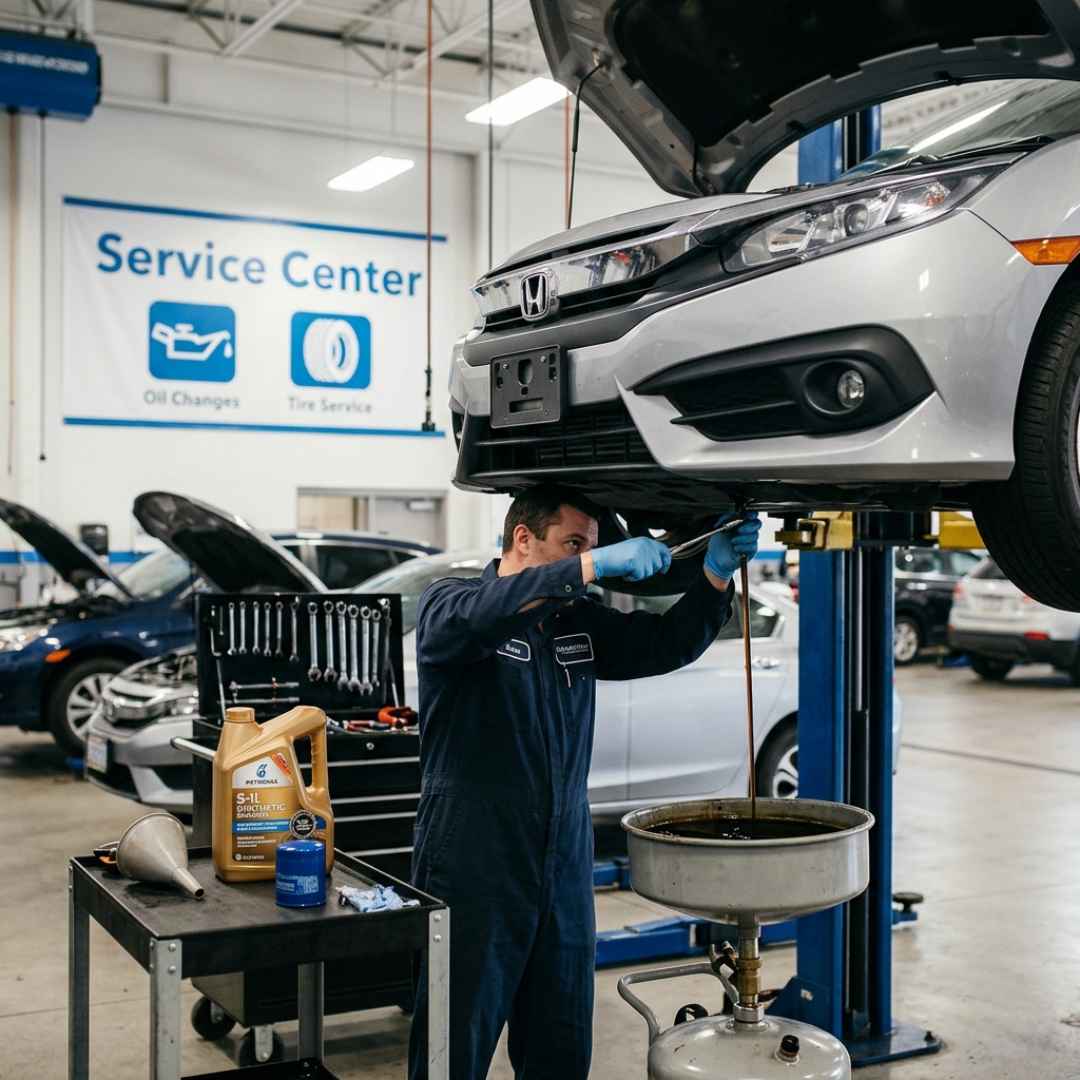
How to Change Your Car’s Oil in 10 Steps
This is a simple car oil change process you can follow for a safe DIY oil change and proper engine oil replacement.
Step 1: Check the Manual
Start with an owner’s manual check. It tells you the correct oil type selection and oil quantity requirement. Always follow these maintenance instructions.
Step 2: Get Tools Ready
Prepare all required tools:
- Wrench
- Oil filter wrench
- Oil drain pan
- Funnel
- Safety gloves
- Jack stands on the vehicle ramp
These are important pieces of safety equipment.
Step 3: Prepare Vehicle
Do proper vehicle preparation:
- Does the engine shut down
- Wait for engine cooling
Follow safety procedures before starting.
Step 4: Go Under the Car
Use jack stands or a vehicle ramp for safe underside vehicle access.
Step 5: Remove Drain Plug
Find the oil drain plug location and do the drain plug removal using a wrench. Keep the pan ready for used oil collection. This part includes messy oil handling.
Step 6: Drain Oil
Let the oil flow completely (oil draining process) with correct oil pan placement. Open the cap for oil filter cap removal to help with faster oil drainage and a smoother oil flow process.
Step 7: Fix the plug back
Do the drain plug cleaning, then tighten the drain plug carefully.
Step 8: Change Oil Filter
Do oil filter removal and allow used oil disposal into the pan. Clean the area (filter area cleaning) and install a new filter (new oil filter installation).
Step 9: Add New Oil
Start the oil pouring process into the engine oil container using a funnel (oil filling with funnel). Then do an oil cap replacement.
Step 10: Check Oil Level
Start the engine (engine start process) and let it run (engine run test) for proper oil circulation.
Then do a dipstick check:
- Ensure correct oil level measurement
- Oil should reach the upper mark level or the hashmark indicator
- This ensures oil level accuracy
Finally, do maintenance record keeping, update service tracking, and note it in your vehicle maintenance log as part of your automotive care routine.
Real Life Experience
A person tried a DIY oil change but skipped proper drain plug tightening. Oil leaked and caused problems. He came to Shahsspaandtirelube in Bolton, Ontario (Canada).
We fixed the issue, completed the correct oil change steps, and guided him on safe oil change methods. Now he either follows proper steps or visits us for service.
For safe and professional oil service 🚗
📍 Visit Shahsspaandtirelube – Bolton, Ontario, Canada
📞 Call Now: +1 (905) 805-1414
Book your oil change today and avoid mistakes!
Frequently Asked Questions (FAQs)?
Ans. Most cars need an oil change every 8000 to 12000 km, but in severe driving conditions like short trips, heavy traffic, or winter driving, it may be needed every 5000 km. Always follow your owner’s manual.
Q2. If I don’t change my oil on time, what will happen?
Ans. Old oil loses lubrication, causes engine friction, overheating, and sludge buildup, and can reduce engine performance and engine life.
Q3. Which oil is better: synthetic or conventional?
Ans. Synthetic oil is better because it gives stronger engine protection, longer life, and better performance in hot and cold weather. Conventional oil is cheaper but needs more frequent changes.
Q4. How do I know my oil needs changing?
Ans. Check your dipstick. If the oil is dark, thick, or low, it’s time for a change. Also, watch for dashboard oil reminders or service alerts.
Q5. Can I do an oil change myself?
Ans. Yes, a DIY oil change is possible if you have the tools and knowledge. But professional service is safer and ensures proper engine care.
Conclusion of Oil Change Charge
Regular oil changes are very important for your car because they protect the engine, improve fuel efficiency, reduce friction, and extend vehicle life. Clean oil helps your engine run smoothly and prevents costly damage.
Whether you follow a DIY method or prefer professional service, always use the correct oil type and follow your maintenance schedule for the best results.
For trusted and professional oil change service in Bolton, Ontario, Canada, visit:
📍 shahsspaandtirelube
📞 Call Now: +1 (905) 805-1414
Book your oil change today and keep your engine safe and healthy 🚗






Leave a Reply