



[How to Change Automatic Transmission Oil?] Automatic transmissions are expensive. Replacing one can cost more than replacing the entire engine in many vehicles. Yet one of the biggest reasons transmissions fail is surprisingly simple: old or incorrect transmission fluid.
Most drivers wait until shifting becomes rough, gears start slipping, or the transmission overheats. By then, internal wear may already be happening.
Changing automatic transmission oil on time keeps hydraulic pressure stable, reduces friction, cools internal components, and helps the transmission shift smoothly for years.
- How automatic transmission fluid actually works
- When to change it
- The safest DIY method
- Tools and fluid types
- Common mistakes that destroy transmissions
- Whether you should flush or simply drain and refill
If you want smoother shifting and a longer transmission life, this is the maintenance job you cannot ignore.
What Does Automatic Transmission Fluid Actually Do?
Automatic transmission fluid (ATF) does far more than simple lubrication.
Inside an automatic transmission, fluid is responsible for:
- Cooling internal components
- Creating hydraulic pressure
- Lubricating gears and bearings
- Reducing wear
- Enabling smooth gear shifts
- Protecting seals and clutch packs
Without clean ATF, the transmission struggles to maintain pressure. That leads to:
- Delayed shifting
- Gear slipping
- Overheating
- Premature clutch wear
- Valve body damage
Modern transmissions are extremely sensitive to fluid quality. Using the wrong ATF can create shifting problems almost immediately.
At Shahsspaandtirelube, we regularly see vehicles develop harsh shifting simply because the wrong transmission fluid was installed.
Signs Your Automatic Transmission Oil Needs Changing
Watch for these warning signs:
- Rough or delayed shifting
- Slipping gears
- Burning smell
- Dark brown or black fluid
- Grinding or whining noises
- Shaking during acceleration
- Transmission overheating warning
- Poor fuel economy
There is usually a bright red or pink color to fresh transmission fluid. Burnt fluid often turns dark brown and smells scorched.
If you notice any of these symptoms, it may be time to learn how to change automatic transmission oil before expensive damage occurs.
How Often to Change Automatic Transmission Oil
There is no universal interval.
Most manufacturers recommend:
- Every 30,000–60,000 miles for severe driving
- Every 60,000–100,000 miles for normal driving
Severe driving includes:
- Towing
- Stop-and-go traffic
- Mountain driving
- Extreme heat
- Frequent short trips
Many drivers ask how often to change automatic transmission oil because newer vehicles often advertise “lifetime fluid.” In real-world driving, heat and contamination still break down ATF over time.
Routine transmission servicing can dramatically improve shifting performance and transmission lifespan.
Tools & Supplies You’ll Need
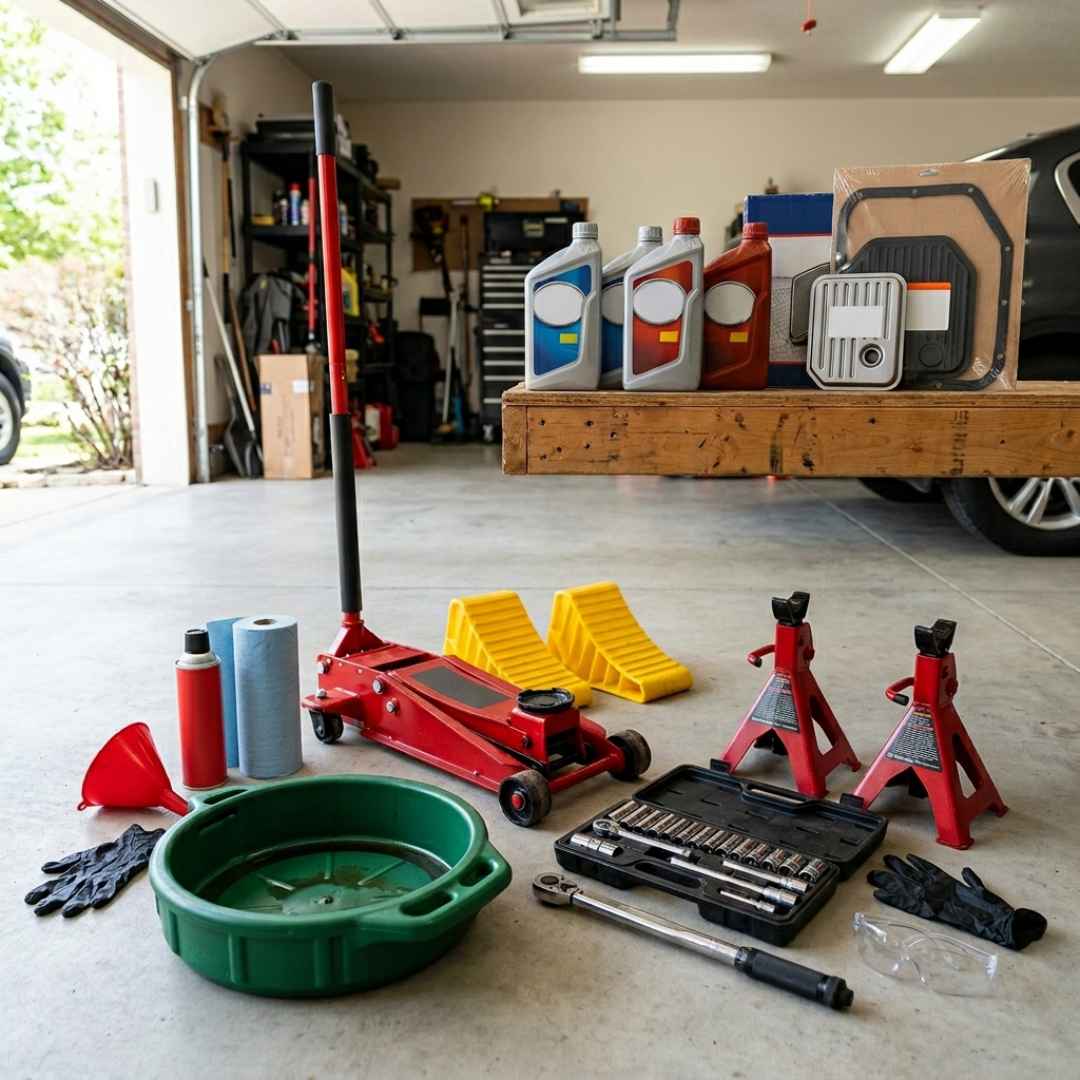
Essential Tools
- Jack and Jack stand
- Wheel chocks
- Socket wrench set
- Torque wrench
- Drain pan
- Funnel
- Gloves
- Safety glasses
- Brake cleaner
- Shop towels
Replacement Parts
- Correct the automatic transmission fluid
- New transmission filter
- Transmission pan gasket
Always verify the exact fluid specification in your owner’s manual before starting.
Step-by-Step: How to Change Automatic Transmission Oil
Step 1: Warm Up the Transmission
Drive the vehicle for 10–15 minutes.
Warm fluid drains faster and removes more contaminants from the transmission.
Do not work on the transmission immediately after driving. Allow components to cool slightly.
Step 2: Lift and Secure the Vehicle
Park on level ground.
Use:
- Parking brake
- Wheel chocks
- Jack stands
Never rely only on a hydraulic jack.
Safety matters during any automatic transmission service.
Step 3: Locate the Transmission Pan
The transmission pan is usually located underneath the vehicle.
Some vehicles include:
- Drain plugs
- Service ports
- Sealed transmission systems
If there is no drain plug, fluid will drain once the pan bolts are loosened.
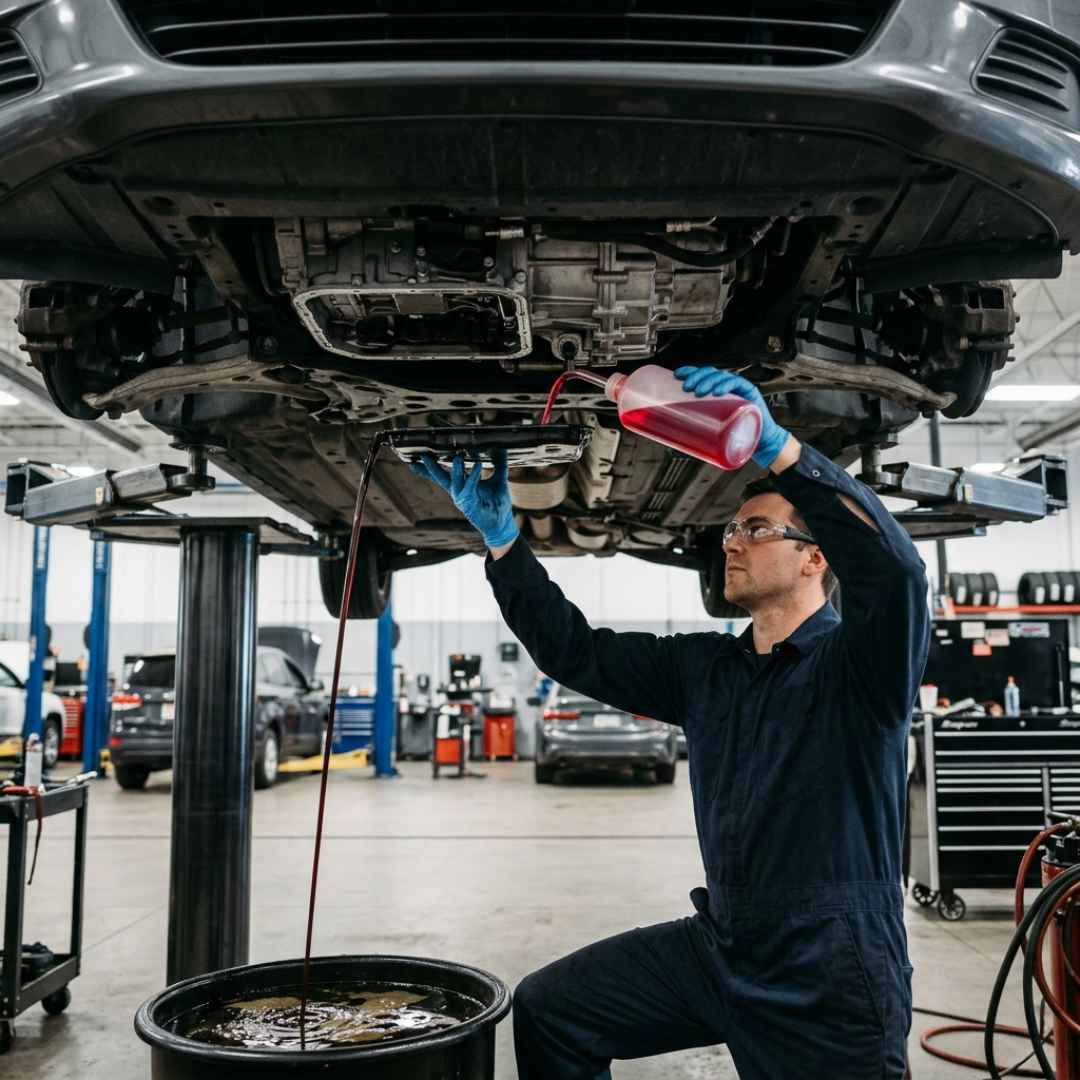
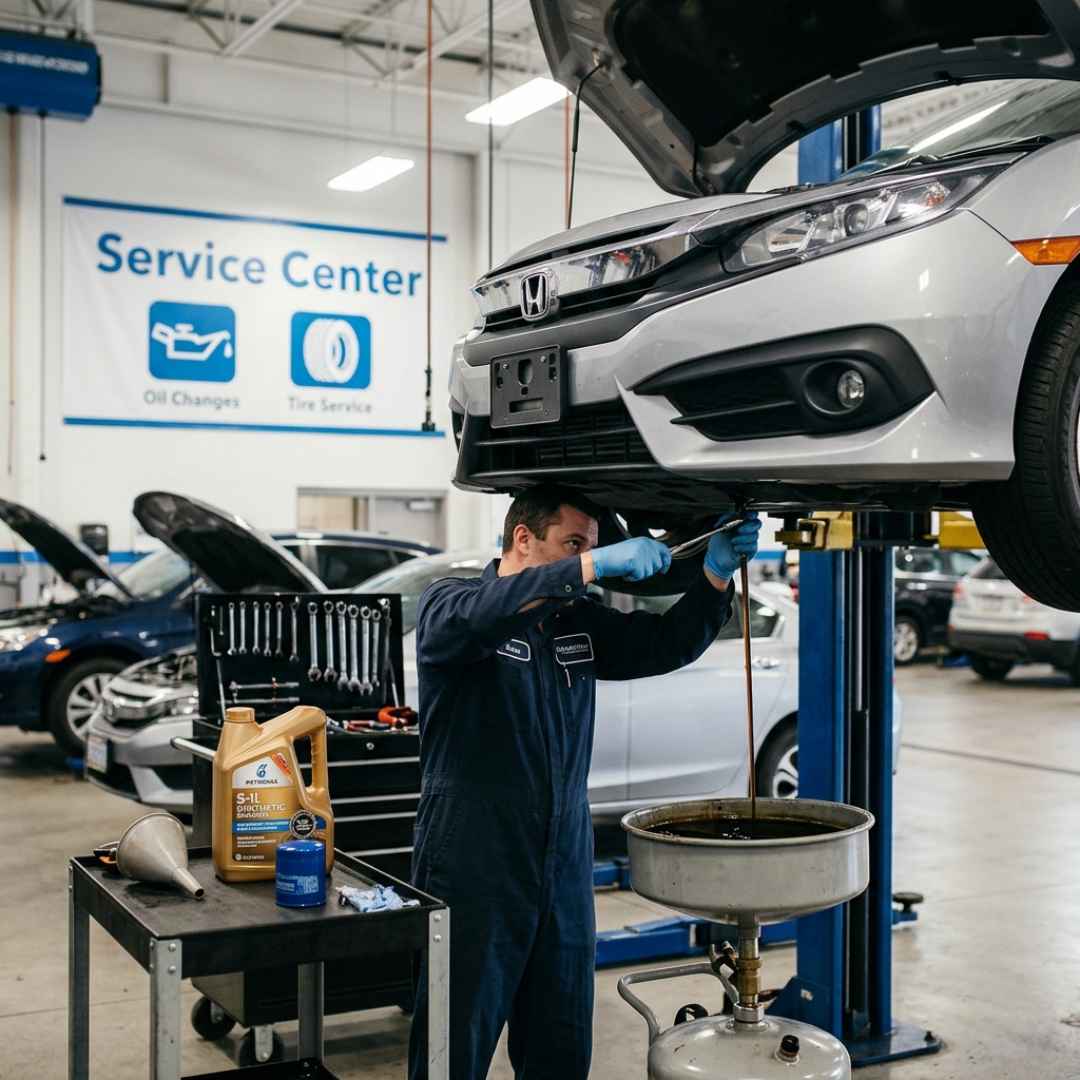
Step 4: Drain the Old Fluid
Place a drain pan underneath the transmission.
Remove:
- Drain plug (if equipped)
OR - Pan bolts slowly
Inspect the fluid carefully:
- Bright red = healthy
- Brown/dark = worn
- Metallic particles = possible internal wear
A small amount of fine metallic dust is normal. Large metal fragments are not.
Drivers researching how to change oil in automatic transmission systems should always inspect the old fluid condition before refilling.
Step 5: Remove the Transmission Pan
Once drained:
- Remove remaining bolts
- Lower the pan carefully
Inside the pan, magnets collect metal debris from normal wear.
Clean:
- Pan surface
- Magnets
- Old gasket residue
Brake cleaner works well for removing sludge and contaminants.
Step 6: Replace the Transmission Filter
The filter traps contaminants before they circulate through the valve body and clutch packs.
Remove the old filter carefully and install the new one in the correct position.
A clogged filter can cause:
- Pressure loss
- Delayed shifts
- Slipping gears
At Shahsspaandtirelube, filter replacement is always recommended during major transmission fluid servicing.
Step 7: Install the New Gasket and Pan
Attach the new gasket and reinstall the transmission pan evenly.
Avoid overtightening bolts. Uneven torque can warp the pan and create leaks.
Using a torque wrench is highly recommended.
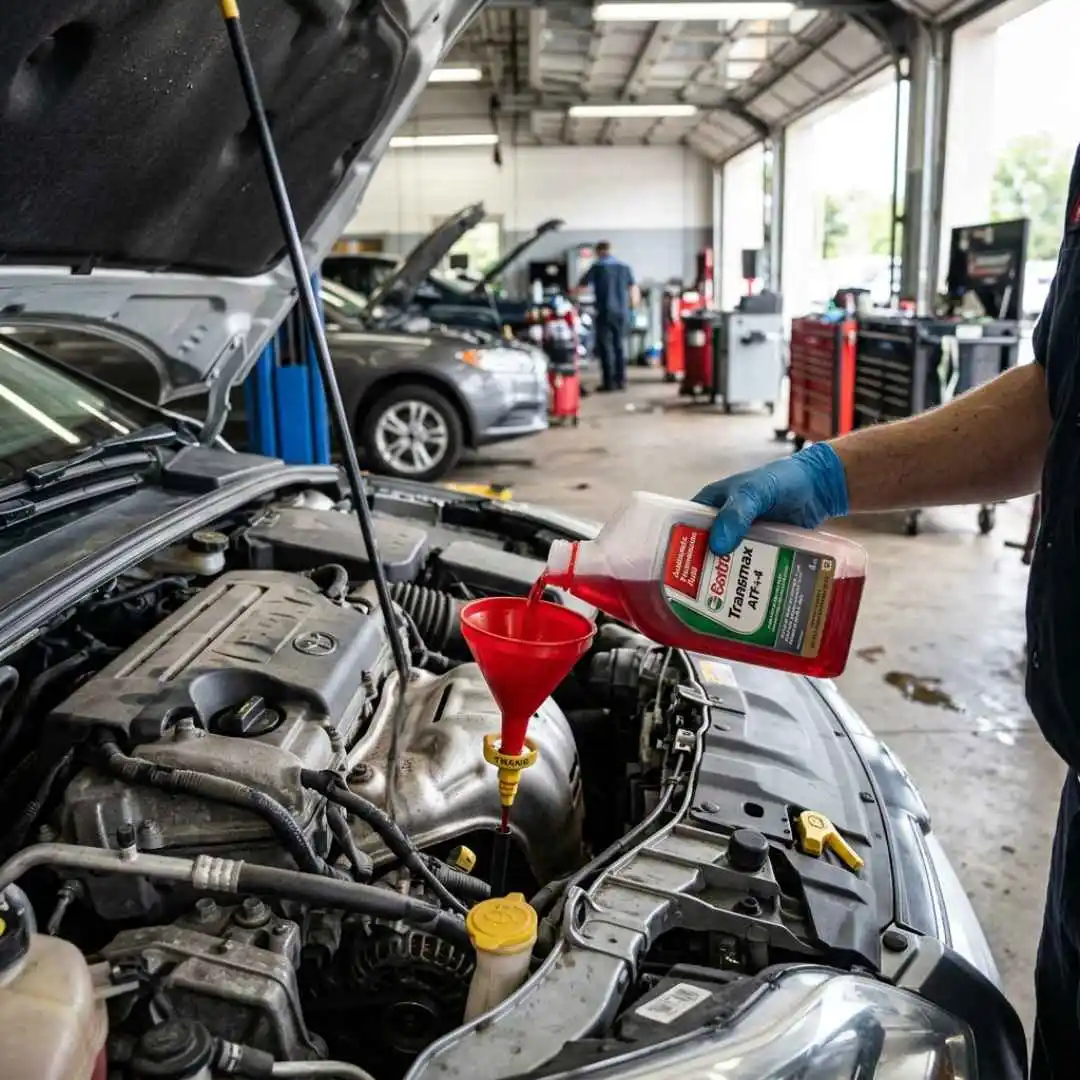
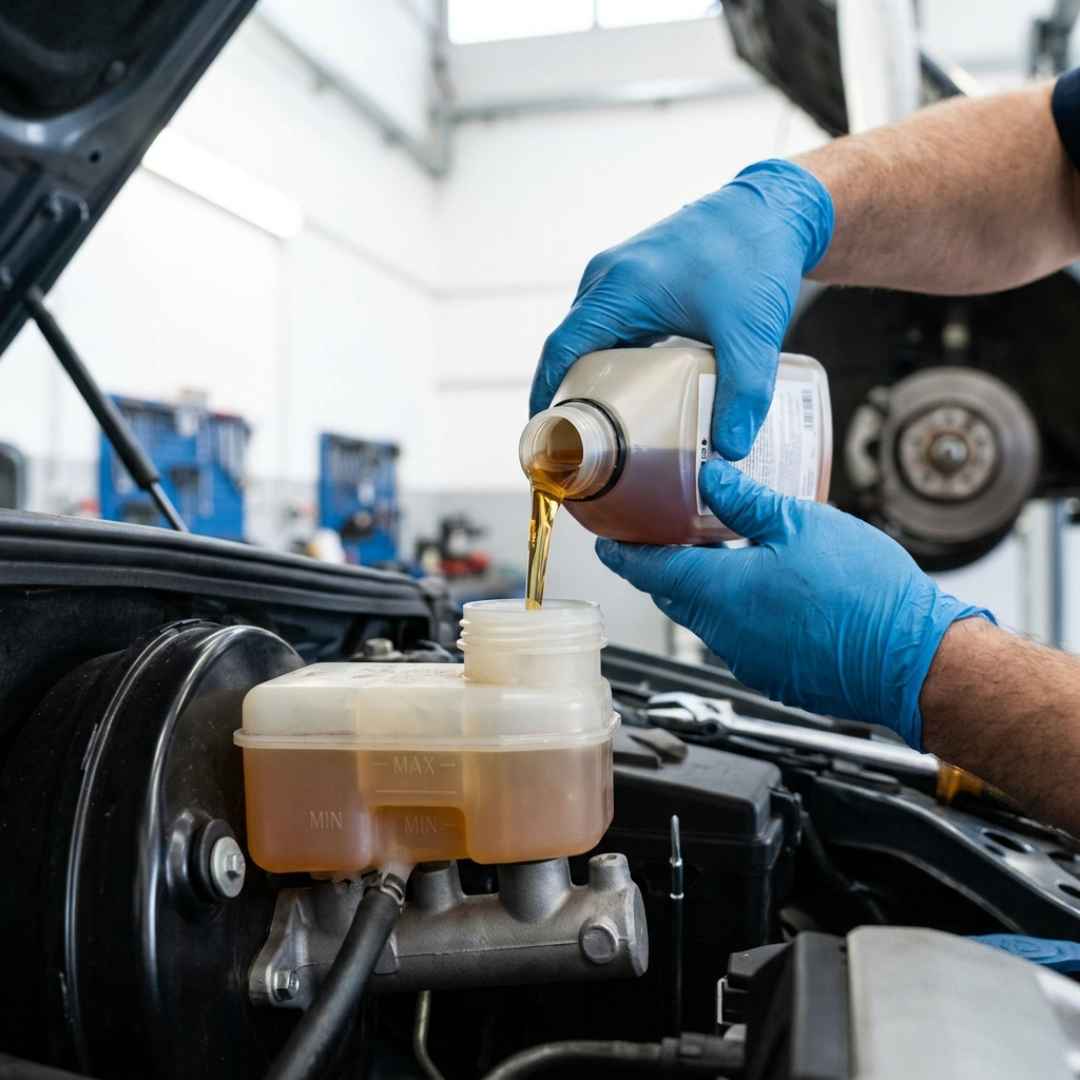
Step 8: Refill with New Transmission Fluid
Lower the vehicle and refill the transmission slowly using a funnel.
Only use manufacturer-approved ATF.
Incorrect fluid can damage:
- Solenoids
- Clutch packs
- Valve body components
One of the most common questions we hear is how much to change fluid oil transmission automatic systems properly. The answer depends on vehicle design:
- Drain-and-fill services usually replace 30–50% of the total fluid
- Pan-drop services replace more
- Full flushes replace nearly all fluid
Always follow factory fluid capacity specifications.
Step 9: Start the Engine and Cycle Gears
Start the engine.
With your foot on the brake:
- Shift through all gears slowly
- Pause 2–3 seconds in each gear
This circulates fluid throughout the transmission system.
Step 10: Check Fluid Level
Many vehicles require checking transmission fluid:
- While warm
- Engine running
- On level ground
Overfilling can cause:
- Fluid foaming
- Pressure loss
- Overheating
Fluid accuracy is critical for transmission health.
Transmission Fluid Change vs Transmission Flush
| Service Type | Fluid Replaced | Risk Level | Recommended For |
|---|---|---|---|
| Drain & Fill | Partial | Low | Routine maintenance |
| Pan Drop Service | Moderate | Low-Medium | Most vehicles |
| Full Flush | Nearly all fluid | Medium-High | Healthy systems |
Important Warning
A transmission flush on a neglected transmission can sometimes loosen debris and accelerate failure.
Older high-mileage vehicles with burnt fluid should be inspected carefully before flushing.
At Shahsspaandtirelube, we typically recommend drain-and-fill servicing for aging transmissions because it reduces unnecessary risk.
Common Mistakes That Ruin Automatic Transmissions
Using the Wrong Fluid
Different transmissions require different friction characteristics.
Dexron, Mercon, CVT fluid, and OEM-specific fluids are not interchangeable.
Overfilling the Transmission
Too much fluid creates foam and unstable hydraulic pressure.
Ignoring the Filter
Changing fluid without replacing the filter leaves contamination inside the transmission.
Mixing Old and New Fluid Incorrectly
Multiple drain-and-fill cycles may be required for extremely contaminated systems.
Skipping Torque Specifications
Overtightened bolts can crack pans and create leaks.
Transmission Fluid Color Chart
| Fluid Color | Condition | Action Needed |
|---|---|---|
| Bright Red | Healthy | No action |
| Light Brown | Aging | Monitor/change soon |
| Dark Brown | Worn | Replace immediately |
| Black/Burnt | Severe degradation | Inspect transmission |
Myth vs Fact
Myth: Transmission fluid lasts forever
Fact:
Heat and contamination eventually break down all ATF.
Myth: Flushes are always better
Fact:
Aggressive flushing can damage neglected transmissions.
Myth: Any red transmission fluid works
Fact:
Modern transmissions often require highly specific fluid chemistry.
Pro Mechanic Insight
From years of hands-on transmission servicing at Shahsspaandtirelube, one of the biggest mistakes drivers make is waiting too long before servicing transmission fluid.
By the time harsh shifting starts, internal clutch wear may already be occurring.
Routine drain-and-fill servicing every 40,000–60,000 miles often results in:
- Smoother shifting
- Lower operating temperatures
- Reduced internal wear
- Better long-term reliability
Another major issue is fluid compatibility. Even healthy transmissions can develop shifting problems if incorrect universal ATF is used.
Should You Change Transmission Fluid Yourself?
DIY transmission servicing can save money when performed correctly.
It’s usually manageable for:
- Basic maintenance
- Drain-and-fill services
- Filter replacement
However, professional service may be safer if:
- The transmission is sealed
- Temperature calibration is required
- Specialized scan tools are needed
- The vehicle uses CVT or dual-clutch technology
If you are unsure, professional servicing can help avoid costly mistakes.
People Also Ask?
How long does it take to change automatic transmission oil?
Most DIY transmission fluid changes take between 1 and 3 hours, depending on the vehicle design and whether the filter and pan gasket are replaced.
Can changing transmission fluid cause problems?
If the transmission is already heavily worn or neglected, fresh fluid may reveal existing problems. Regular maintenance greatly reduces this risk.
What is the difference between transmission fluid and transmission oil?
Yes. Many drivers use both terms interchangeably. Automatic transmissions use ATF, which works as both a hydraulic fluid and a lubricant.
What happens if the transmission fluid is low?
Low transmission fluid can cause:
- Slipping gears
- Delayed shifting
- Overheating
- Internal clutch damage
Driving with low ATF can permanently damage the transmission.
Should I flush or drain transmission fluid?
For most vehicles, a drain-and-fill service is safer and sufficient for routine maintenance. Flushes are better suited for healthy transmissions with good service history.
Can I use universal transmission fluid?
Only if it specifically matches your manufacturer’s required fluid specification.
Conclusion: How to Change Automatic Transmission Oil
Changing automatic transmission oil is one of the smartest preventative maintenance services for long-term vehicle reliability.
Clean ATF helps:
- Stabilize hydraulic pressure
- Improve shift quality
- Reduce wear
- Prevent overheating
- Extend transmission lifespan
Understanding:
- How to change automatic transmission oil
- How to change the oil in an automatic transmission
- How often to change automatic transmission oil
- and how much to change the fluid in the automatic transmission
can help drivers avoid some of the most expensive automotive repairs.
Modern transmissions are more advanced than ever, which makes proper fluid maintenance even more important today.
If your transmission has never been serviced, now is the perfect time to inspect fluid condition and schedule maintenance before small issues become major repairs.
Leave a Reply