



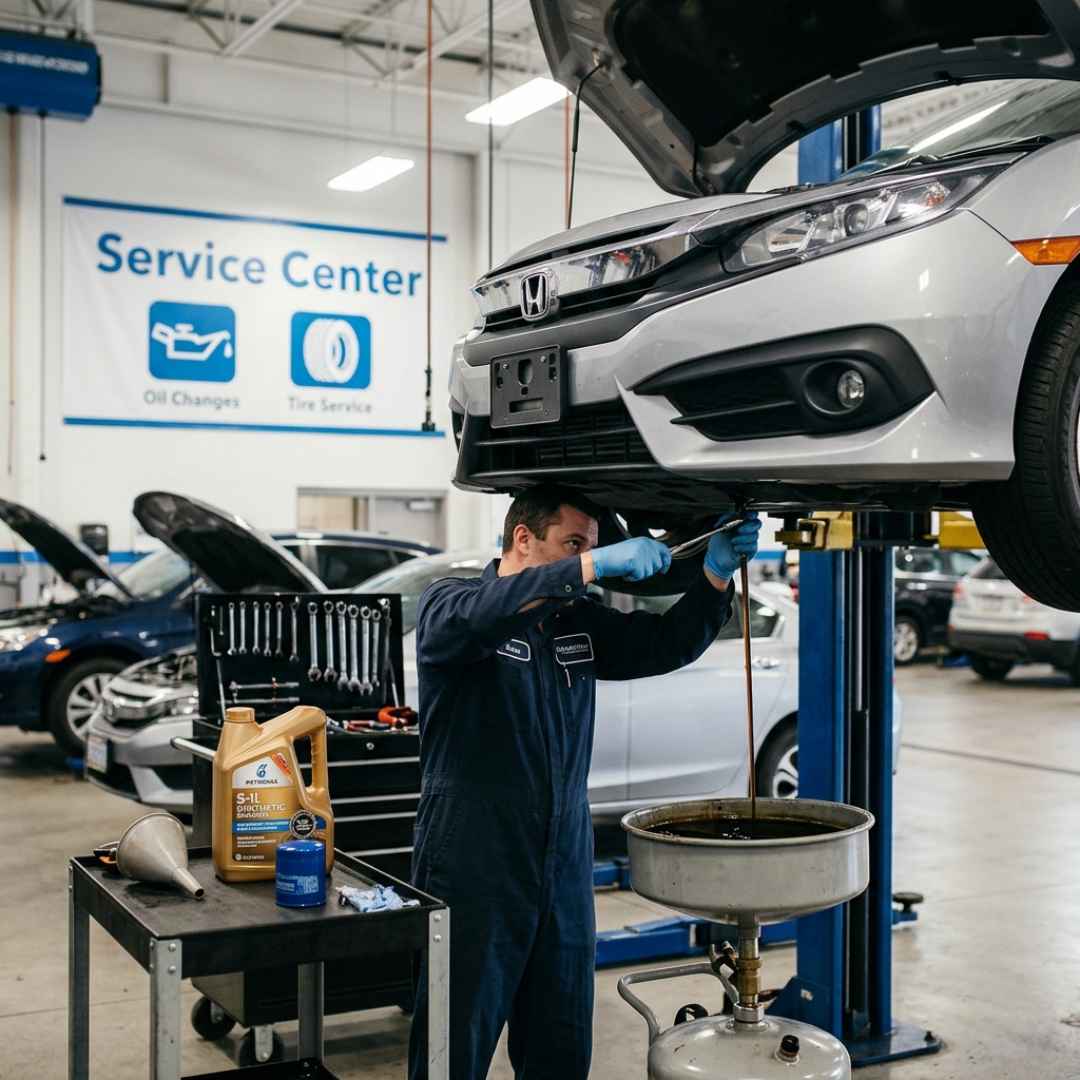
In Canada, how many km between oil changes depends on Engine Oil type, Vehicle Age, Driving Habits, and weather conditions. Most vehicles using Conventional Oil need Oil Changes every 5,000–6,000 KM, while Synthetic Oil can last 8,000–12,000 KM. Harsh Winter, Idling, Stop-and-Go Driving, Short Trips, Towing, and Extreme Cold can shorten the Oil Change Interval and increase Engine Wear, Oil Breakdown, and poor Fuel Economy.
Modern Vehicles use Oil-Life Monitors and Oil Monitoring Technology, but Canadian Mechanics still recommend checking the Owner’s Manual, Oil Condition, Oil Filter, and Maintenance Schedule regularly for better Engine Protection, Vehicle Reliability, and Engine Health.
At Shahsspaandtirelube in Bolton, one SUV owner ignored Routine Maintenance during winter and later faced rough Engine Performance caused by dirty Engine Oil and Moisture buildup.
How Many KM Between Oil Changes? Don’t Risk Engine Damage
Your car talks to you. Sometimes it whispers before it screams.
A rough engine sound. Weak pickup. Bad fuel mileage. These small signs often point to one thing: old Engine Oil.
At Shahsspaandtirelube in Bolton, many drivers ask the same question: how many km between oil changes? The answer depends on your car, driving habits, oil type, and weather.
Engine Repair Costs in Canada
- Minor repairs: CAD $300–$1,200
- Major repairs: CAD $2,000–$5,000
- Engine replacement: CAD $4,000–$10,000+
Fuel Economy Loss (Dirty Oil)
- Light oil wear: 2%–5% fuel loss
- Heavy wear: 5%–10% fuel loss
- Severe neglect: up to 15% fuel loss
Owner’s Manual Oil Intervals
- Conventional Oil: 5,000–6,000 km
- Synthetic Oil: 8,000–12,000 km
- Severe driving: reduce by 30%–40%
How Many KM Between Oil Changes?
Most vehicles need an Oil Change every 5,000 to 10,000 kilometers. The exact distance depends on Engine Oil type, weather, driving style, engine age, and road conditions. Full Synthetic Oil usually lasts longer, while stop-and-go traffic, towing, and dusty roads can shorten oil life much faster.
Think of Engine Oil like cooking oil in a frying pan. Use it too long, and it turns thick and dirty.
That’s why drivers often search:
- How many kms between oil changes
- How many km are between oil changes
- How many km can you go between oil changes
The answer changes from one vehicle to another.
A small Sedan used for city driving won’t need the same schedule as a Diesel Truck carrying heavy loads.
At Shahsspaandtirelube, drivers from Bolton, Ontario often ask:
- How many km are between synthetic oil changes
- How many km between oil changes, diesel
- How many km are needed between a synthetic oil change
Synthetic Oil usually lasts longer because it handles heat better and keeps the engine cleaner.
Typical Oil Change Distance
| Oil Type | Recommended KM |
|---|---|
| Conventional Oil | Around 5,000 KM |
| Synthetic Blend Oil | Around 7,500 KM |
| Synthetic Oil | Around 10,000 KM or more |
Always check your owner’s manual and Oil Life Monitor first.
What Happens If You Wait Too Long?
Driving too long without an Oil Change can cause Engine Sludge, weak performance, poor Fuel Economy, and Engine Overheating. Dirty Engine Oil loses its ability to protect moving parts, which increases friction and heat inside the engine and raises the chance of costly repairs later.
Dirty oil acts like mud inside your engine.
At first, you may hear ticking sounds. Later, the engine may run hotter and burn more fuel.
A customer visited Shahsspaandtirelube after ignoring his Dashboard Warning Light for months. His High-Mileage Car started shaking badly during traffic stops. The oil looked thick like syrup. After a full Oil Change and filter replacement, the engine sounded smoother, and fuel mileage improved within days.
Common Problems From Delayed Oil Changes

- Engine Sludge
- Engine Overheating
- Weak acceleration
- Poor Fuel Economy
- Burning smell
- Loud engine noise
Does Synthetic Oil Last Longer?
Synthetic Oil lasts longer because it handles heat better, stays cleaner, and breaks down more slowly than Conventional Oil. Many drivers safely travel longer distances between Oil Changes when using Synthetic Oil, especially during normal driving conditions and regular vehicle maintenance schedules.
This is why many drivers search:
- How many km are between oil changes with synthetic oil
- How many kms between synthetic oil changes
Synthetic Oil works better during:
- Cold Canadian winters
- Heavy traffic
- Highway driving
- Towing
Synthetic Blend Oil sits in the middle. It costs less than full Synthetic Oil but lasts longer than Conventional Oil.
Think of it like winter boots. Cheap boots may work for a short walk, but stronger boots handle snow and rough roads better.
Driving Habits That Shorten Oil Life
Short trips, towing, dusty roads, and stop-and-go traffic wear out Engine Oil faster. These driving conditions create more heat and contamination inside the engine, which lowers oil quality and shortens the distance between Oil Changes.
City traffic is tough on engines.
Drivers in Bolton, Ontario, who sit in traffic daily usually need Oil Changes sooner.
Severe driving conditions include:
- Heavy traffic
- Cold starts
- Fast acceleration
- Carrying heavy loads
- Dusty roads
These conditions increase oil oxidation and sludge formation faster.
Can You Trust the Oil Life Monitor?
An Oil Life Monitor estimates oil condition using mileage, temperature, driving style, and engine load. It helps drivers track oil health, but manual checks with a Dipstick and regular inspections still matter because driving conditions affect oil wear differently.
Oil monitors help, but they’re not perfect.
Check your Dipstick often. Fresh oil looks smooth and amber-colored. Dirty oil looks dark and gritty.
If your Dashboard Warning Light turns on, don’t ignore it.
At Shahsspaandtirelube, technicians inspect:
- Oil condition
- Oil filter lifespan
- Engine leaks
- Fluid levels
- Engine lubrication cycle performance
Best Oil Change Schedule for Different Vehicles
Different vehicles need different Oil Change schedules.
That’s why people search:
- How many km are between oil changes for a Honda Civic
- How many km between oil changes nissan rogue
- How many kms between oil changes honda crv
- How many kms between oil changes toyota highlander
- How many km are between oil changes for the Audi S5
Each engine handles heat and stress differently.
| Vehicle Type | Recommended KM |
|---|---|
| Sedan | 5,000–8,000 KM |
| SUV | 7,000–10,000 KM |
| Diesel Truck | 8,000–15,000 KM |
| High-Mileage Car | 5,000–7,000 KM |
Modern engines using low-viscosity oils like 0W-20 may go longer between services.
API certification and oil viscosity also matter. Oils like 5W-30 and 0W-20 protect engines differently depending on climate and engine design.
Why Professional Oil Changes Matter
Professional Oil Change services help drivers avoid mistakes, protect engine parts, and catch small problems early. Mechanics also inspect filters, leaks, and oil condition during service, which helps many vehicles stay reliable longer and lowers the risk of major engine trouble.
At Shahsspaandtirelube, drivers in Bolton, Ontario trust trained technicians for:
- Proper Engine Oil Selection
- Filter replacement
- Oil viscosity checks
- Oil oxidation inspection
- Severe driving condition recommendations
A fast Oil Change today can prevent expensive repairs tomorrow.
Oil Standards and Why They Matter
Groups like the American Petroleum Institute and Society of Automotive Engineers created standards for Engine Oil quality and viscosity.
These standards help drivers choose the right oil for better engine protection.
Modern Synthetic Oil products now support:
- Better cold-start protection
- Cleaner engines
- Longer Oil Change intervals
- Improved Fuel Economy
Smart oil monitoring systems are also becoming more common in newer vehicles.
Conclusion: How many km between oil changes
Fresh Engine Oil keeps your engine cool, smooth, and protected.
Ignoring oil changes for too long, and small problems can snowball into major repairs.
Whether you drive a Sedan, SUV, Diesel Truck, or High-Mileage Car, regular maintenance keeps your vehicle running stronger for longer.
Need an Oil Change in Bolton, Ontario?
Contact Shahsspaandtirelube today.
Book Appointment Now
Frequently Asked Questions (FAQs)
How many km between oil changes is normal?
Most vehicles need an Oil Change every 5,000 to 10,000 kilometers depending on the Engine Oil type, driving habits, weather, and engine condition. Synthetic Oil usually lasts longer than Conventional Oil, while heavy traffic, towing, and short trips can shorten oil life much faster.
How many km between synthetic oil changes can you safely drive?
Most cars using Synthetic Oil can safely drive between 8,000 and 15,000 kilometers before needing an Oil Change. The exact distance depends on your vehicle, road conditions, and driving style. Always check your owner’s manual and Oil Life Monitor for the safest maintenance schedule.
Can old Engine Oil damage my engine?
Yes, old Engine Oil can damage your engine because it becomes dirty and loses its ability to lubricate moving parts properly. This can cause Engine Sludge, Engine Overheating, rough performance, and poor Fuel Economy if the Oil Change is delayed too long.
Does highway driving increase oil life?
Yes, highway driving usually helps Engine Oil last longer because the engine runs at steady speeds and stable temperatures. Stop-and-go traffic creates more heat and stress on the oil, which causes it to wear out faster compared to long highway trips.
Where can I book an Oil Change in Bolton, Ontario?
Drivers in Bolton, Ontario, can book a professional Oil Change at Shahsspaandtirelube for fast service, proper oil selection, and vehicle inspections. Regular Oil Changes help protect your engine, improve Fuel Economy, and reduce the risk of costly repairs later.

Leave a Reply