


Rust on a car happens when metal gets old and starts breaking down because of water, rain, or moisture in the air. Many people face this problem, especially if the car is used for a long time or parked outside.
I remember once a neighbor in my street had an old car. He ignored small rust spots on the door, thinking they were not important. After a few months, those small spots became big holes, and the car started looking very damaged. Later, he had to spend a lot of money to fix it because the rust spread everywhere.
If you’re wondering how do you repair rust on a car, it starts with spotting the rust early, sanding and cleaning the affected area, and then applying primer and fresh paint to protect the metal. Repairing rust on a car means fixing those rusty areas properly before they spread and cause serious damage. It is very important to take care of rust quickly so the car stays strong, looks good, and remains safe for a long time.
Learn How to Repair Rust on Car – Step by Step (Simple & Easy Guide)
Repairing rust on a car may sound difficult, but honestly, it’s like cleaning a wound before it spreads. If you follow the right rust repair process, use proper automotive tools, and stay patient, you can do a solid DIY car repair at home—even if you’re a beginner.
👉 Don’t want to deal with all this yourself? Book now for expert rust repair: +1 (905) 805-1414
I’ll explain everything in a very simple way, step by step, so even a 5th-grade student can understand.
Step 1: Gather the Right Tools & Materials
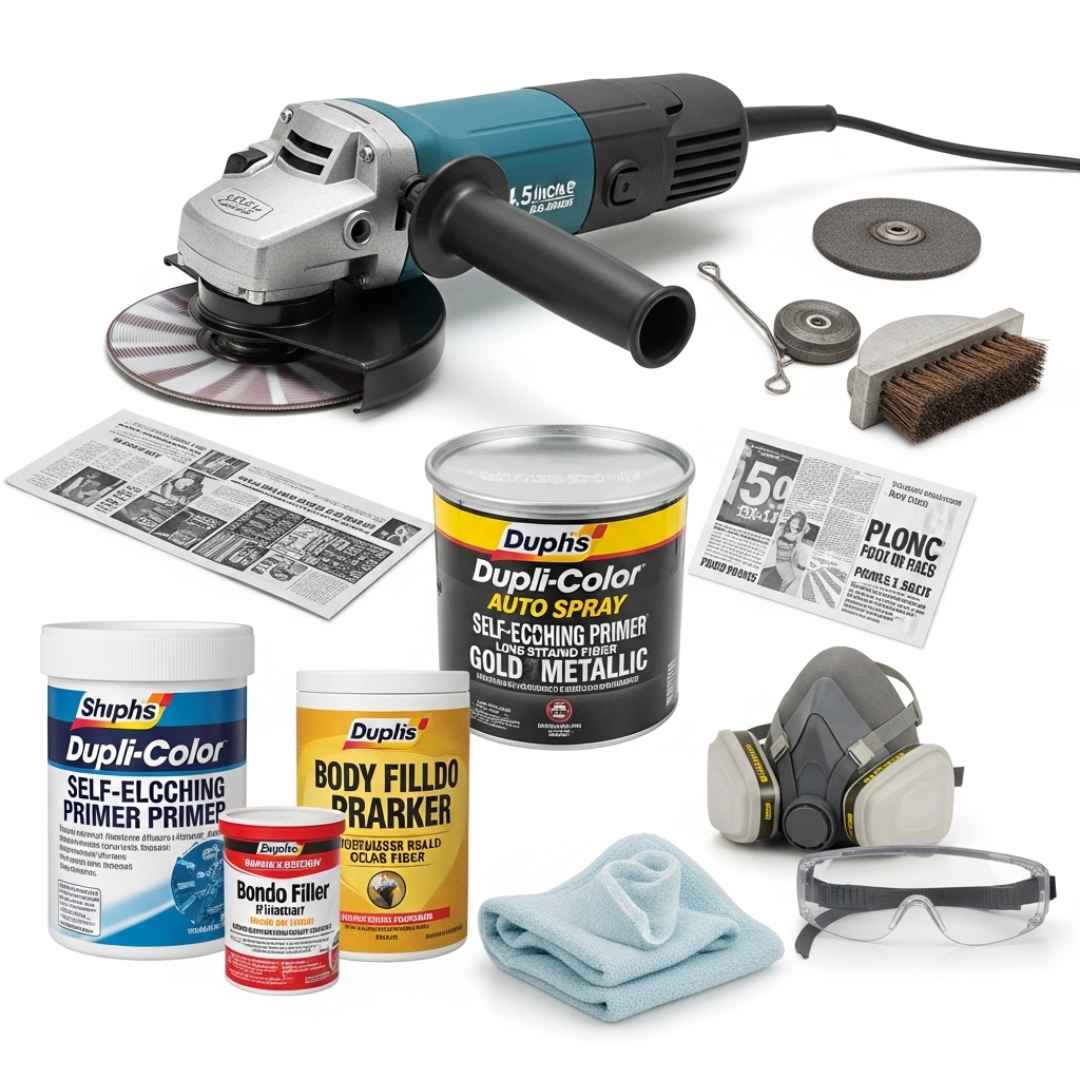
Before starting, collect all your tools and materials. Without the right tools, your work can go wrong.
You will need:
- Angle grinder or circular power sander
- 4.5-inch grinder with flapper wheel
- Sandpaper (80, 120, 200, 400, 600, 1000 grit)
- Wire brush, grinding wheel
- Body filler (Bondo filler) and hardener
- Fiberglass repair gel (long strand glass fibre)
- Automotive primer (etching primer like Dupli-Color Self-Etching Primer)
- Automotive paint (like Dupli-Color Auto Spray Sunburst Gold Metallic)
- Clear coat (optional but recommended)
- Masking tape, newspaper masking, poly sheeting
- Tack cloth, microfiber cloth, clean rag
- Mineral spirits, grease remover
- Respirator mask, safety goggles
You can buy most of these from auto parts stores like Shahs Spa and Tire Lube Auto Parts.
👉 Missing tools or don’t want to invest? Call +1 (905) 805-1414 and let professionals handle everything for you.
Step 2: Get Yourself Ready (Safety First)
Always follow automotive safety rules.
- Wear long sleeve shirt and pants
- Use a respirator mask (for paint fume protection)
- Wear safety goggles (to protect eyes from paint dust)
- Work in a well-lit garage and ventilated workspace
Even small rust spots can throw sharp particles while sanding.
👉 Stay safe and save time—book a professional rust repair today: +1 (905) 805-1414
Step 3: Assess the Situation / Remove the Wheel
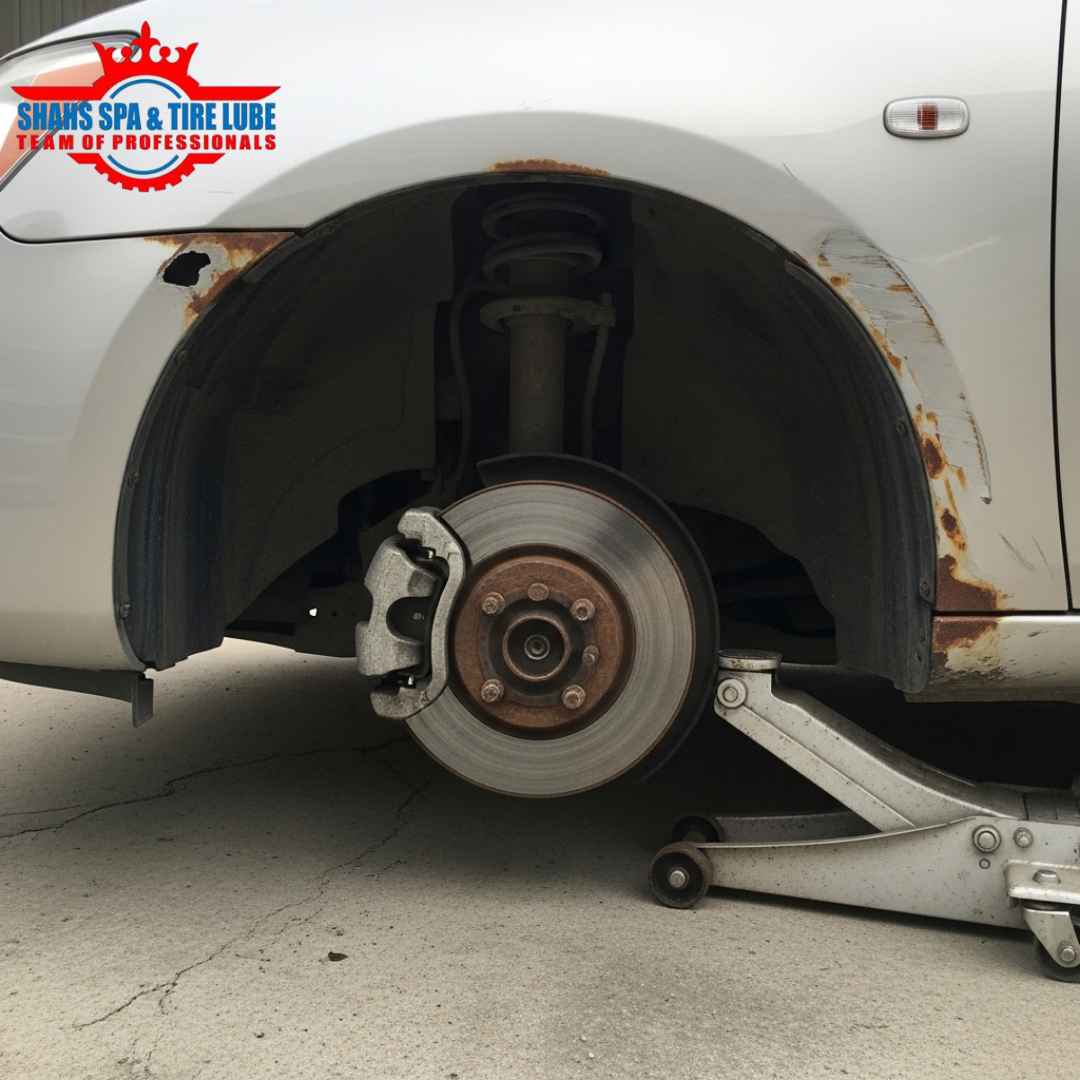
First, carefully assess the situation.
Check:
- Is it surface rust or serious damage?
- Is the car fender damaged?
- Is there pitted metal or holes?
Then:
- Use a jack to jack a car
- Remove the wheel for better access
- Take off the plastic liner in the wheel well
This gives you proper grinding access behind the sheet metal for better body work.
👉 Not sure how bad the rust is? Get a quick expert check: +1 (905) 805-1414
Step 4: Mask Around the Area You’re Treating
Now protect your car from paint overspray.
- Use masking tape and newspaper masking
- Cover nearby parts with poly sheeting
- Use a tarp cover for engine protection
Leave some space for paint blending later.
👉 Avoid messy mistakes—call +1 (905) 805-1414 for clean, professional results.
Step 5: Remove Paint and Rust
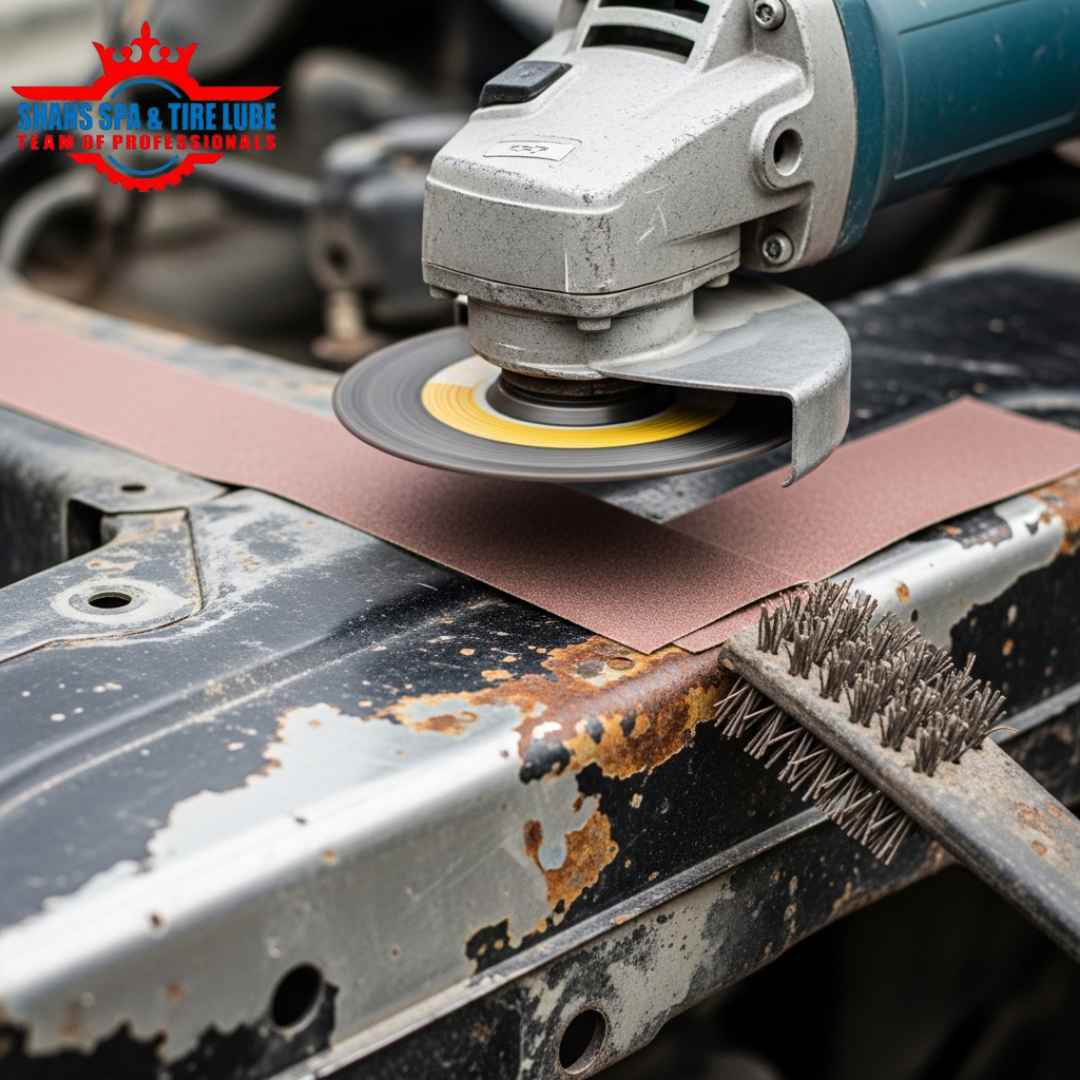
This is the most important step.
- Use an angle grinder with a flapper wheel
- Start removing old paint and rust spots
- Use 80-grit sandpaper or 120-grit sandpaper
- For tight areas, use a wire brush
Keep sanding until you see clean metal.
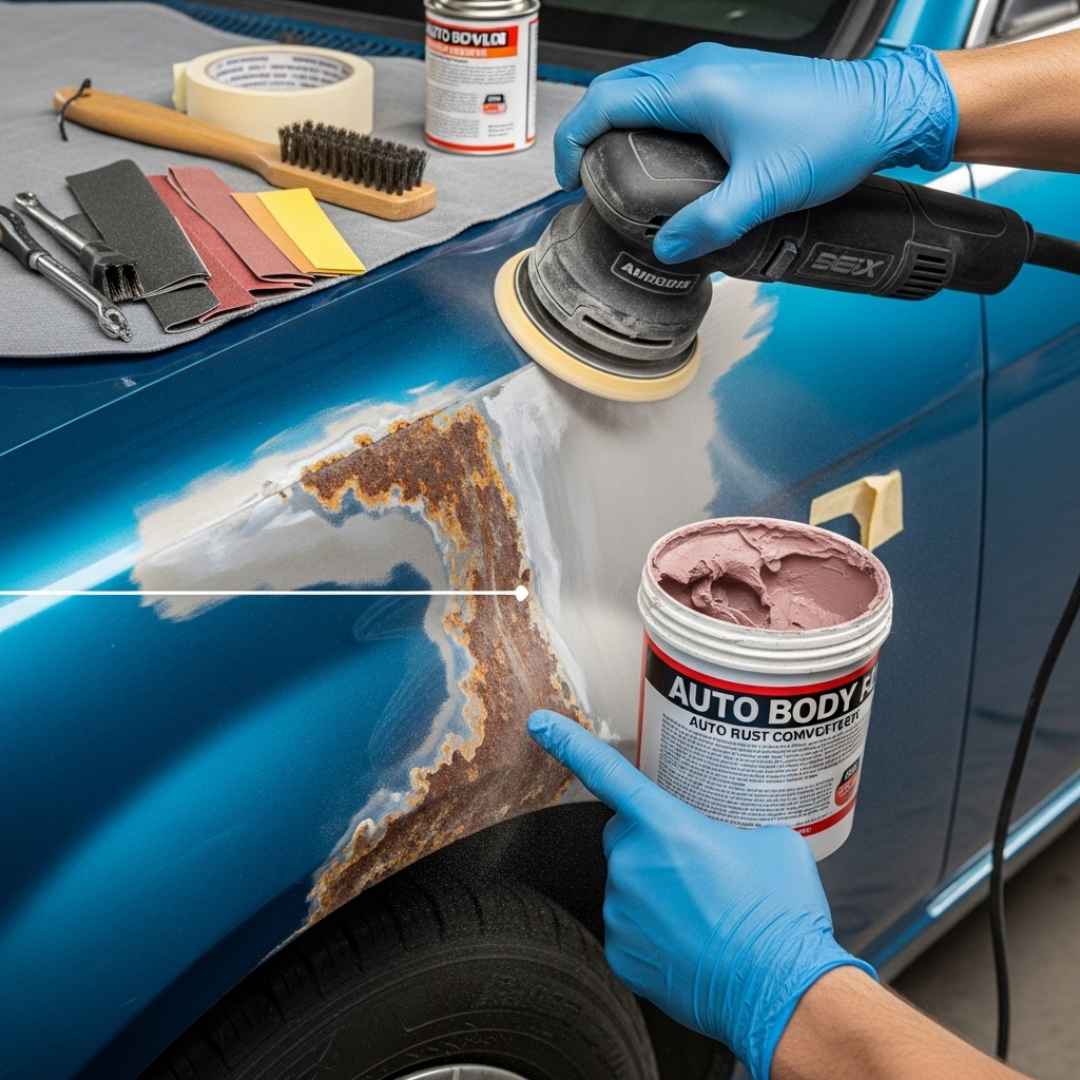
You can also apply a rust converter for chemical neutralization, which forms a protective black coating.
👉 Rust removal done wrong = rust comes back. Do it right—call +1 (905) 805-1414
Step 6: Grind Some More
Now switch to a metal grinding wheel.
- Remove deeper rust from pitted metal
- Smooth rough areas
- Finish with hand sanding for a smooth surface
Be careful—grinders are powerful and can damage sheet metal.
Step 7: Repair with Fiberglass (If Holes Exist)
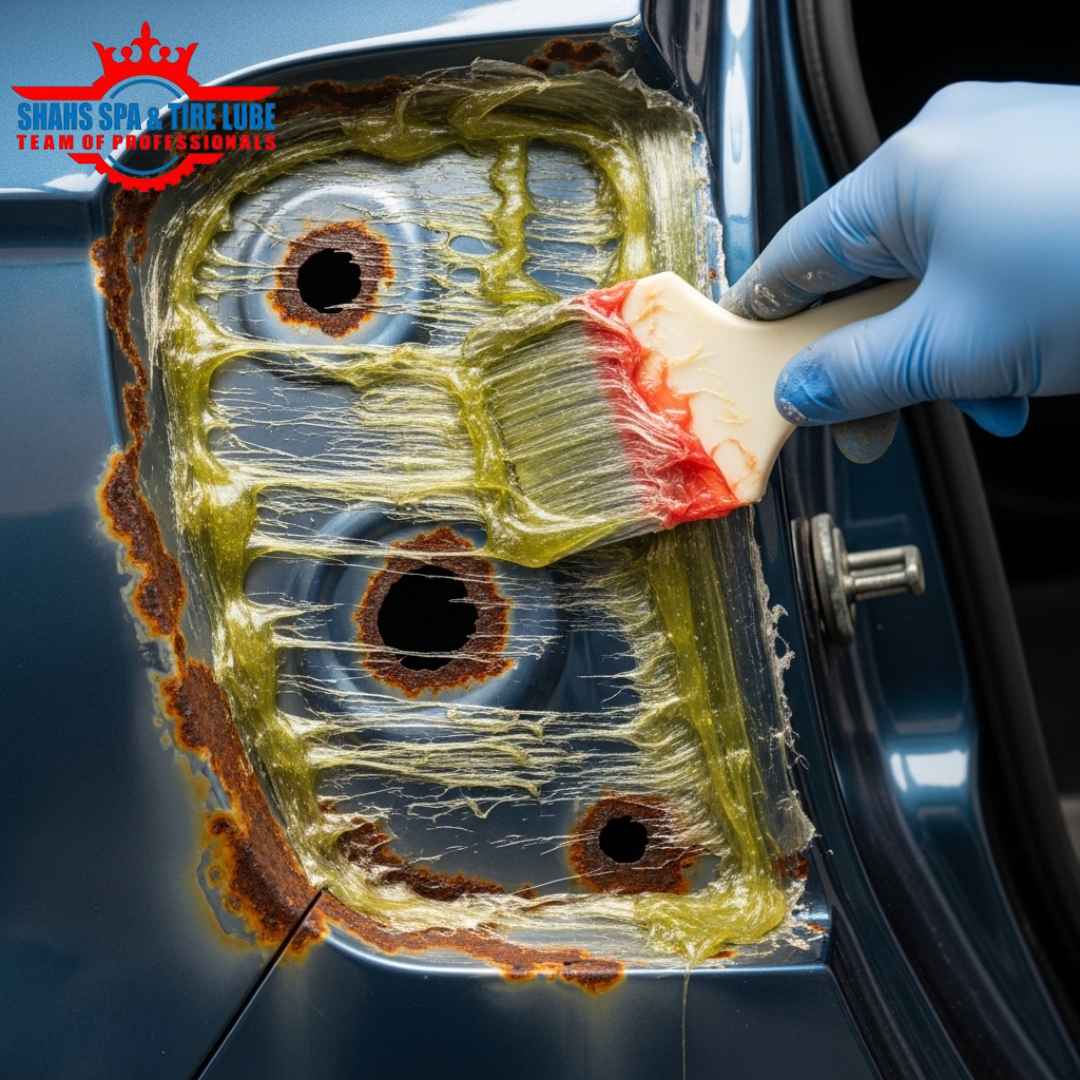
If rust created holes:[How to Repair Rust on Car]
- Use fiberglass repair gel (long strand glass fibre)
- Mix with hardener
- Apply from behind the metal body panel
This creates a structural repair almost as strong as steel.
Let it cure (usually 15–60 minutes).
👉 For strong, long-lasting repair, trust experts: +1 (905) 805-1414
Step 8: Sand Excess Fiberglass
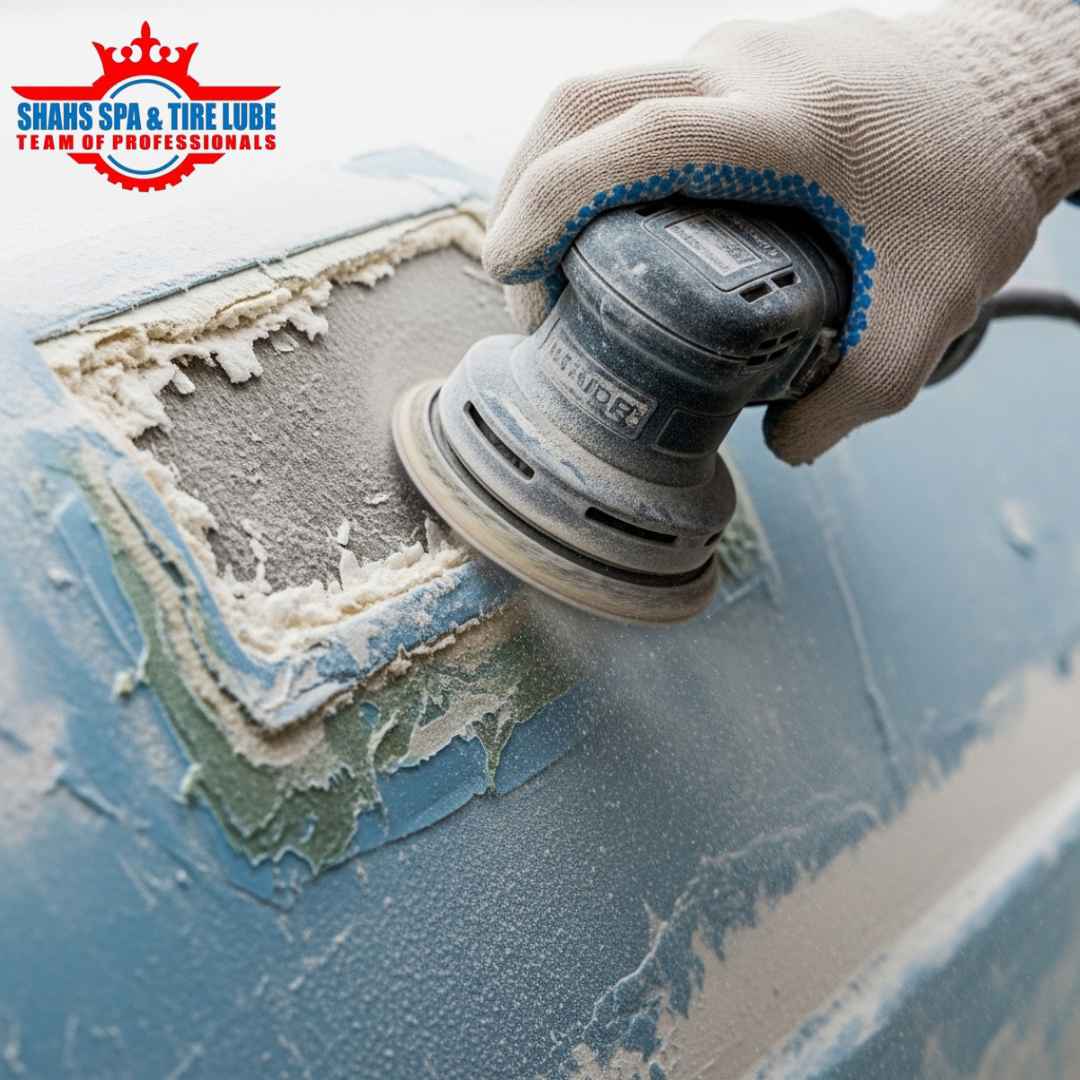
- Use a grinder or sandpaper to remove extra gel
- Make the area slightly recessed
This helps later when applying body filler.
Step 9: Apply Body Filler
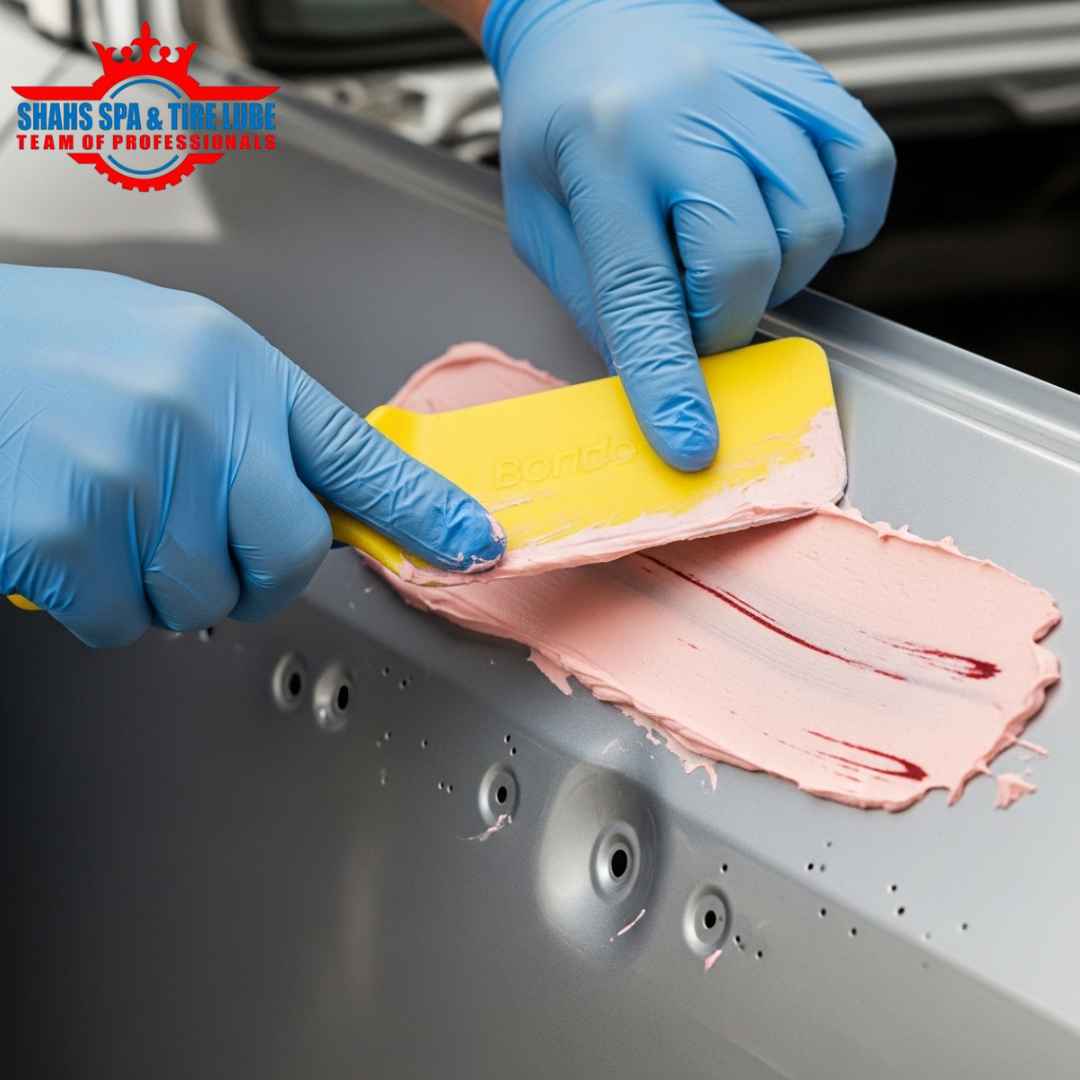
Now use Bondo filler.
- Mix with proper filler hardener ratio
- Apply using a flexible spreader
- Fill pinholes, low spots, dents
Try to keep it flat to reduce sanding later.
Step 10: Sand It Smooth
This step takes time but gives professional results.
- Start sanding with 150–200 grit sandpaper
- Finish with 400-grit sandpaper
- Use a sanding block to avoid a wavy surface
Goal: a perfectly smooth surface finish
👉 Want that factory-smooth finish? Book now: +1 (905) 805-1414
Step 11: Clean the Area
Clean everything properly.
- Use a clean rag + mineral spirits
- Remove oil, dirt
- Wipe with a tack cloth to remove dust and lint
If not clean, you’ll get paint defects like:
- Fisheyes
- Paint runs
Step 12: Prep for Painting
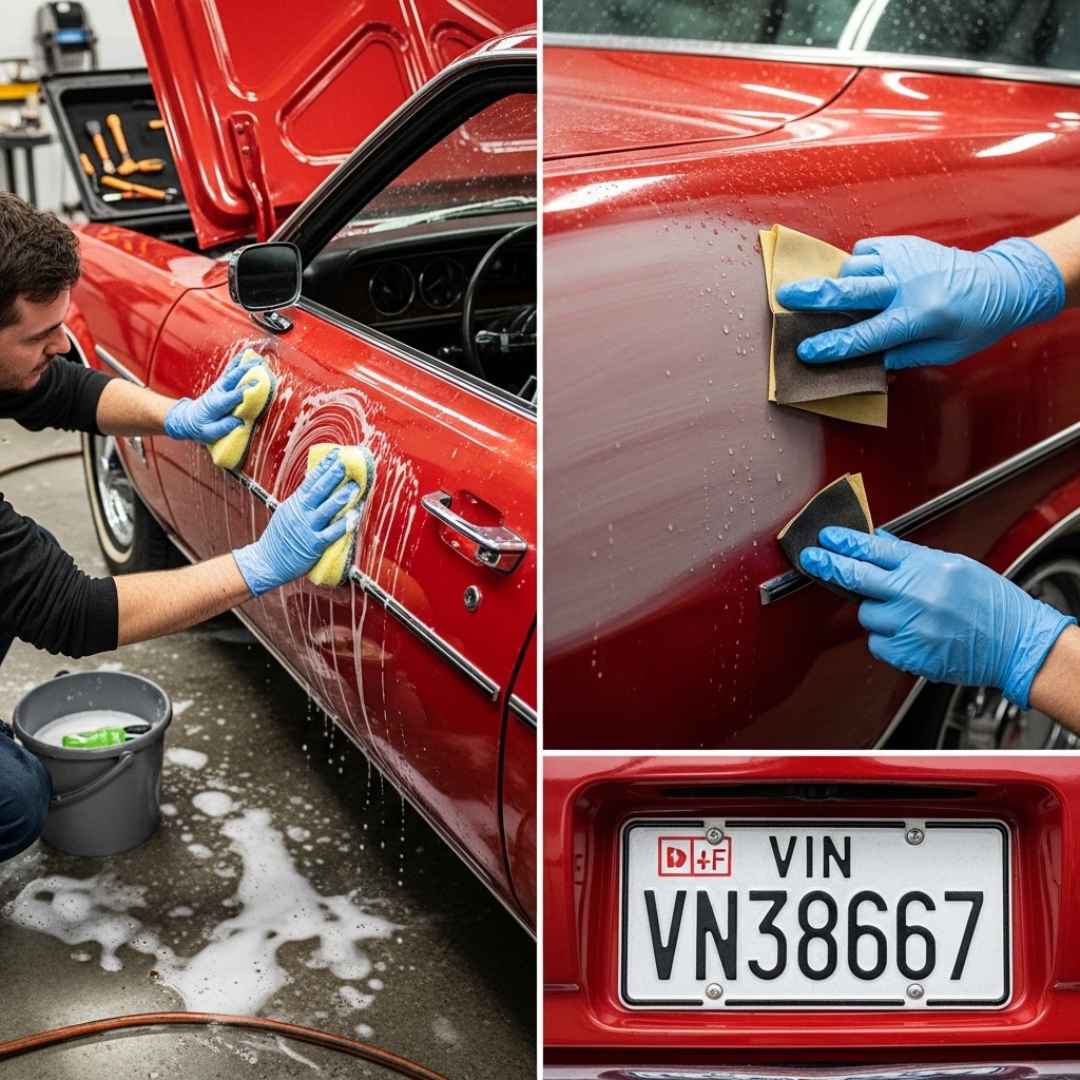
Now do final surface preparation:
- Wash with car wash soap
- Light wet sanding (400 grit)
- Dry completely
Check your paint code from:
- Driver side door jamb
- VIN plate
- Trunk or engine compartment
This ensures proper color matching.
👉 Perfect color matching is tricky—get it done right: +1 (905) 805-1414
Step 13: Apply Primer
- Use etching primer or epoxy primer
- Spray thin primer coats
- Cover bare metal
Let it dry, then:
- Wet sanding (600 grit)
- Repeat multiple primer coats
Step 14: Wet-Sand and Repeat
- Use 600 → 1000 grit sandpaper
- Smooth and feather edges
- Repeat until the surface feels perfect
This improves paint adhesion and finish.
Step 15: Spray the Base Coat
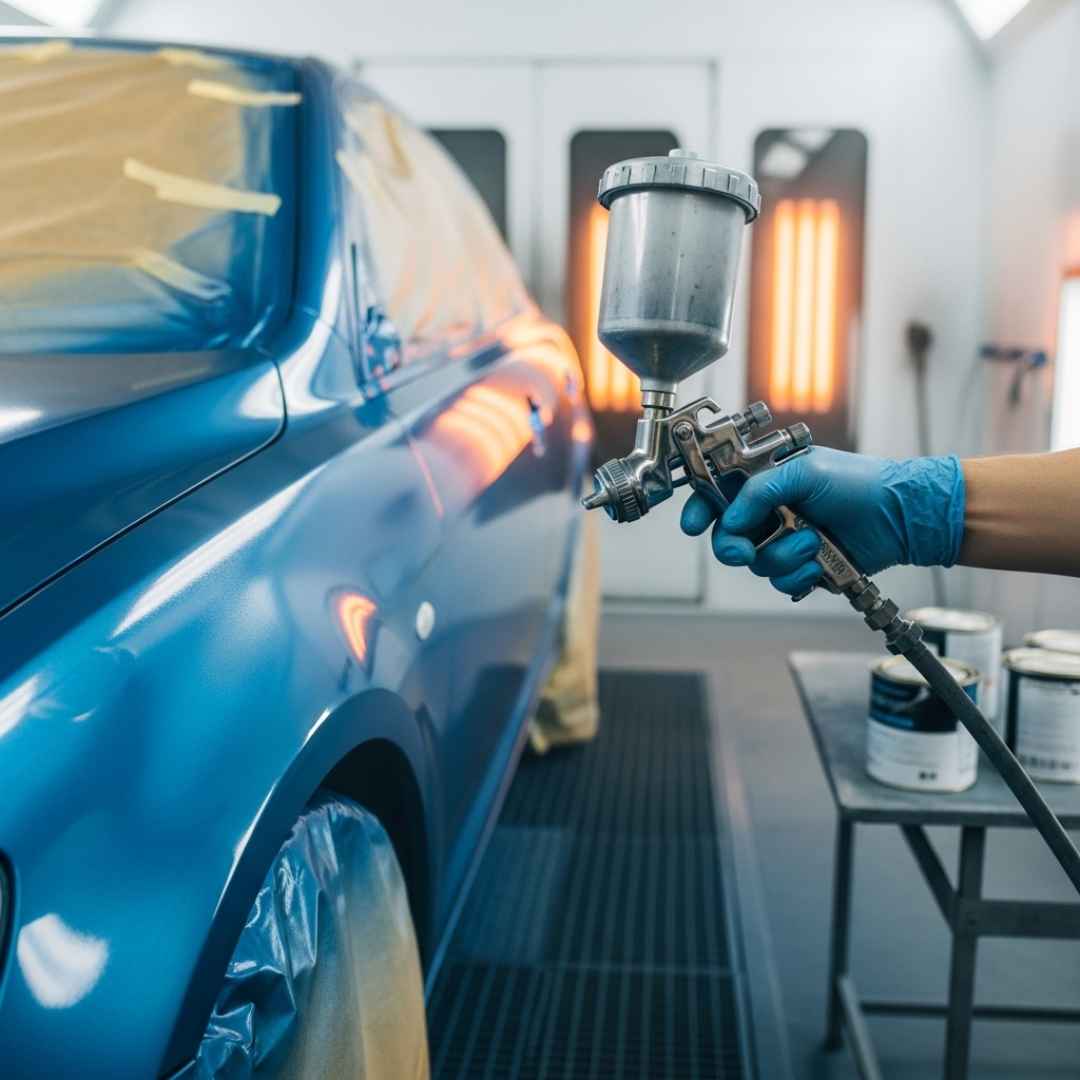
Now apply automotive paint (base coat).
- Spray thin coats
- Keep a distance of around 10–12 inches
- Apply 2–3 layers
This avoids:
- Paint drips
- Paint sagging
Allow proper drying time between coats.
👉 Need a flawless paint job? Call now: +1 (905) 805-1414
Step 16: Rub Out the Paint
After drying:
- Use rubbing compound/polishing compound
- Fix issues like:
- Orange peel effect
- Uneven finish
You can also do:
- Wet sanding (1000–2000 grit) for correction
Step 17: Spray the Clear Coat (Optional but Best)
Apply clear coat spray:
- Protects from UV, weather, and solvents
- Gives a gloss finish
- Improves durability
You can use 2K clear coat for professional results.
👉 Want long-lasting shine and protection? Book today: +1 (905) 805-1414
Step 18: Wash and Wax (Final Step)
After the full curing process (24–48 hours):
- Wash the car
- Apply wax
This improves:
- Shine restoration
- Protective coating
👉 Bring back showroom shine—call +1 (905) 805-1414 now!
Real-Life Experience (Simple Story)
I once fixed rust on my car’s fender near the wheel well. At first, I thought it was a small spot, but when I started sanding, I found deeper rust underneath. I removed the wheel, cleaned everything, and used a 4.5 inch grinder. It took me around 5–6 hours of labor, but the result looked amazing.
The total cost saving was huge—around $20 instead of $200+ from a body shop cost. The best part? The satisfaction of doing car restoration myself.
👉 Don’t want to spend hours doing this? Save time and effort—book now: +1 (905) 805-1414
DIY Car Rust Repair (Simple Step-by-Step Guide)
Car rust looks scary, but it can be fixed if you follow the right DIY car rust repair steps carefully. Think of it like cleaning and patching a wound so it doesn’t spread on your car’s body.
👉 Need professional help instead of DIY? Book now: +1 (905) 805-1414
This guide explains everything in a very simple way, so even a beginner can understand.
Tools You Will Need
For proper car rust removal and automotive bodywork, collect these items:
- Akkai Body Filler
- 80-grit sandpaper
- 320-grit sandpaper
- Sanding block
- Paint scraper
- NC grey putty or com paint filler
These tools help fix rusted car panels, especially on areas like the driver’s side rear door of a car, such as a Hyundai Verna.
👉 Don’t have tools or time? Call now: +1 (905) 805-1414
Step 1: Surface Preparation (Cleaning First)
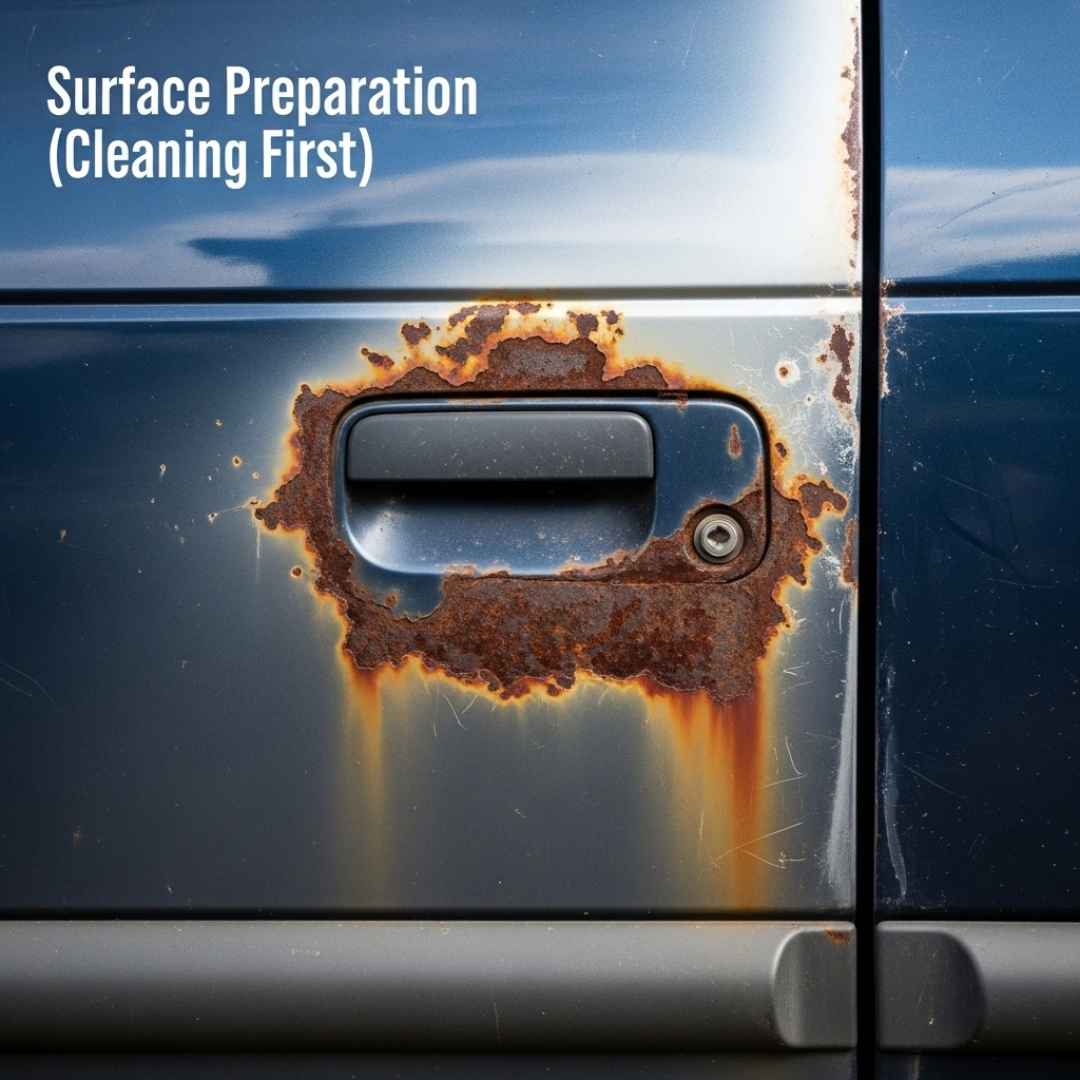
First, wash the area properly to remove dirt and rust dust.
- Clean the vehicle’s rust spots
- Do proper body panel cleaning
- Use isopropyl alcohol for the final wipe
This helps expose the real damage and ensures strong rust damage repair.
Now the metal should look clean and ready for work — this is called a clean metal surface and proper rust elimination.
Step 2: Remove Rust Using Sandpaper
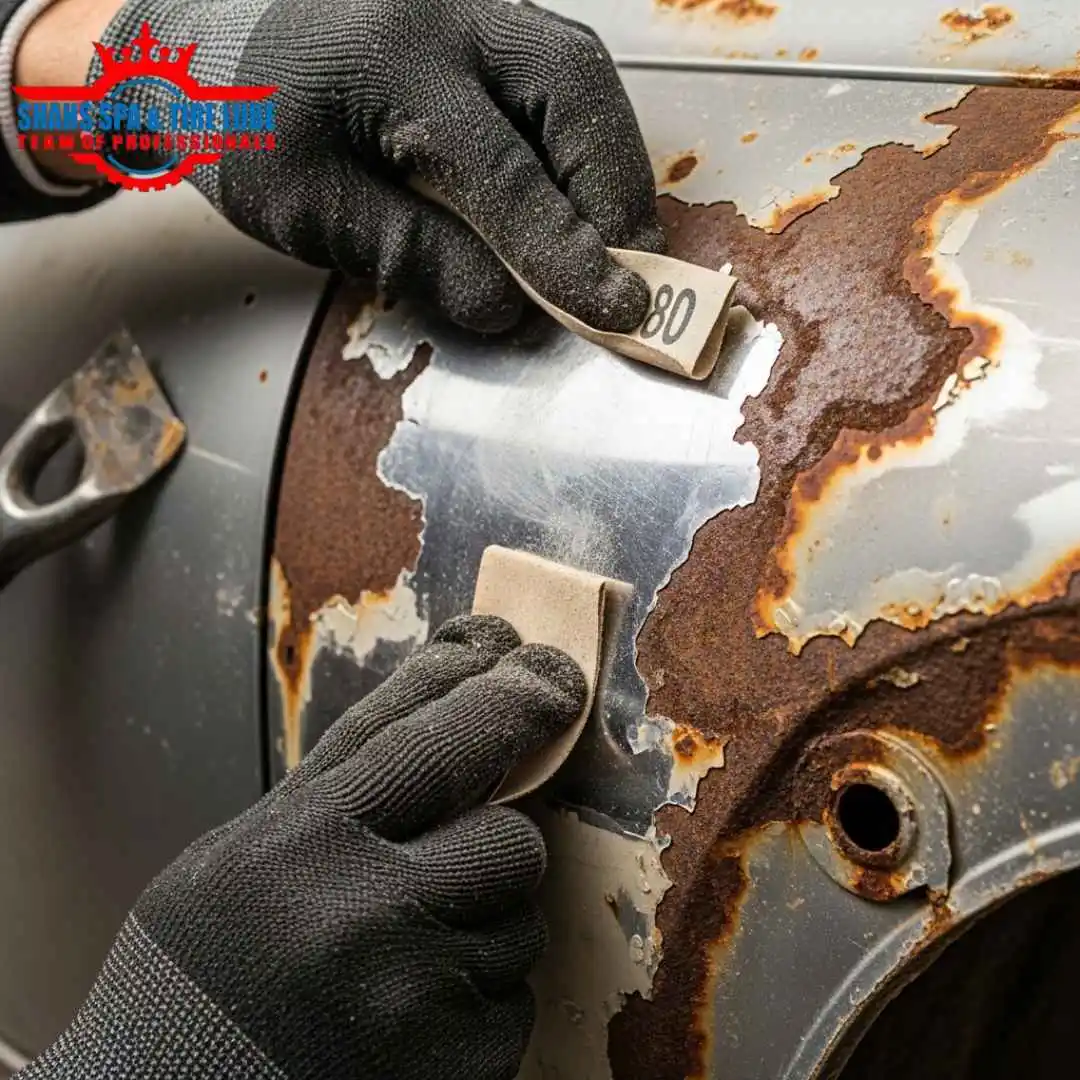
Start sanding the area:
- Use 80-grit sandpaper for heavy rust removal
- Until bare metal is visible, remove all rust
- Use a paint scraper if needed in tight areas
This is the main sanding process and part of full surface preparation.
Step 3: Smooth the Surface
After rust removal:
- Use 320-grit sandpaper
- Use a sanding block for even pressure
This helps in panel leveling and surface smoothing, making the area ready for filler.
Step 4: Apply Body Filler:How do You Repair Rust Holes on a Car
Now apply Akkai body filler.
- Mix filler with hardener (correct mixing ratio)
- Avoid air bubbles (air bubble prevention)
- Work fast because it is a fast-curing filler
- You only get about 4–5 minutes of working time
Apply it carefully to damaged areas.
This step is called body filler application and helps in fixing dents and rust holes.
Let it dry for about 20 minutes (filler drying time).
👉 For perfect repair without mistakes, book expert service: +1 (905) 805-1414
Step 5: Shape and Sand the Filler

Now shape the area:
- Sand using 80-grit sandpaper first
- Then smooth with shaping techniques
- Use a sanding block for an even surface
This helps in filler shaping, contour alignment, and smooth surface finish.
Goal: the surface should feel flat and natural.
Step 6: Fix Small Holes with Putty
Sometimes tiny holes remain:
- Use NC grey putty or com paint filler
- Fill small imperfections (pinhole repair)
- Sand again for a smooth finish (fine sanding)
This improves paint alignment.
Step 7: Painting Stage (Professional Look)
Now comes painting:
- Apply primer application first (multiple coats)
- Do wet sanding using 600 grit sandpaper
- Then use 1500-grit sandpaper for final smoothness
After that:
- Apply paint using the spray painting technique
- Use aerosol spray paint if DIY, but color matching may be difficult
- Some people face spray can problems or poor finishes
- That’s why a professional auto paint shop is often better for a factory color match
Paint mixing includes:
- automotive paint mixing
- hardener and thinner mix
Then apply multiple paint coats for full coverage.
👉 Want factory-perfect paint finish? Call now: +1 (905) 805-1414
Step 8: Final Finish
After painting:
- Check paint alignment
- Do final polishing for a smooth paint finish
- Ensure proper body panel restoration
- This is part of full automotive refinishing
The result should look like a new panel.
👉 Restore your car like new—book today: +1 (905) 805-1414
Real-Life Experience (Simple Story)
I once did a DIY attempt on a small rust area on my car’s rear door. It looked like a tiny spot, but after sanding, I saw deeper rust under the paint. I used 80-grit sandpaper, body filler, and NC grey putty step by step.
At first, it was difficult, but after sanding and shaping, the panel became smooth again. A local painter gave me positive feedback, saying my filler work was good for a beginner.
The total repair cost was very low, making it a cost-effective repair compared to a full workshop job. The final result gave me real car detailing satisfaction and a nice before-and-after repair transformation.
👉 Don’t risk mistakes—get professional help now: +1 (905) 805-1414
How do you Repair Rust Damage on a Car? (Simple Guide)
If your car has surface rust, you can save a lot of money by doing a DIY rust repair instead of going to a professional body shop.
👉 Important idea: Rust repair savings are biggest when damage is small and not structural.
How Much Money Can You Save
1. Professional Rust Repair Cost
A body shop usually charges:
- Small rust spot: moderate cost
- One panel repair: hundreds of pounds/dollars
- Multiple panels: very expensive
Professional repair includes:
- Surface prep
- Welding or filling
- Painting and blending
👉 This is called a professional body shop repair cost comparison.
2. DIY Rust Repair Cost Saving
If you repair it yourself, you only spend on materials like:
- Sandpaper (80, 400, 600, 1000, 2000 grit)
- Fiberglass epoxy gel
- Body filler application
- Primer, base coat paint, 2K clear coat aerosol
- Masking tape, masking paper
- Rubbing compound, tack cloth, rags
👉 Total DIY cost is usually very low compared to workshop price, giving strong DIY rust repair cost savings.
What Type of Rust Can You Repair Yourself
You can DIY only if it is:
- Surface rust
- Body panel corrosion
- Paint chip rust
- Gravel damage rust
- Door ding rust
These are non-structural car damage problems.
What Causes a Rusty Car?
A car becomes rusty mainly because of everyday conditions and poor protection. The most common rust causes include:
- Exposure to rain, snow, and strong sunlight
- Road salt corrosion in winter areas
- Damp environment and long-term moisture exposure
- Driving on salty roads or in extreme weather conditions
- Stone chips, paint scratches, and scuffs damage that expose metal
- Exposed metal panels after paint is damaged
- Lack of cleaning and poor vehicle care
- Dirt buildup, salt residue, and moisture retention on the surface
- Poor vehicle maintenance that allows rust to spread
All of these things speed up corrosion acceleration, slowly damaging the car’s automotive bodywork.
What Are the Different Types of Rust on a Car?
Rust grows in stages. It starts small but becomes serious if ignored. These stages help us understand how bad the damage is.
1. Surface Rust (Early Stage Rust)
This is the first stage, also called early stage rust. It appears as small rust spots, usually orange or red in color (orange rust marks, red rust discoloration). It happens when scratched paint areas or paint scratches expose the metal.
At this stage, only the top layer is affected, so it is the easiest to fix and is important for rust prevention.
2. Scale Rust
If surface rust is not treated, it turns into scale rust. The metal starts to break down, causing rough patches and flaking. This stage spreads faster and affects more of the body.
3. Penetrating Rust
This is the most serious stage. The rust eats through the metal completely, creating holes in the body panel. It damages the structure and often needs major repair work in professional automotive shops.
Real-Life Simple Example
A driver parked his car outside every day during winter. Snow, rain, and road salt stayed on the door for weeks. A small paint scratch on the door was ignored. After some time, he saw a tiny orange rust spot. That was surface rust.
He did not clean or repair it, and later it became scale rust, spreading under the paint. After a few months, the metal started to break, and a hole appeared. This became penetrating rust, which needed expensive repair.
Common Areas Prone to Rust on Cars
Rust usually starts in weak and exposed parts of the car. These include wheel arches, door sills, undercarriage, exhaust system, windscreen edges, boot lid, suspension components, and chassis components.
These areas collect water, mud, and salt easily, which leads to moisture exposure, road salt damage, rain corrosion, snow corrosion, dirt buildup, and salt residue. Over time, this causes iron oxidation and iron oxide formation, leading to vehicle corrosion signs and bodywork damage.
Regular rust inspection and early rust detection help stop small issues before they grow.
How to Identify Rust on Your Car
Rust can be seen or felt on the surface. Look for:
- Orange rust patches and red rust spots
- Bubbling paint or blistering paint
- Flaking paint and blistered surface texture
- Rough metal surface under paint
- In serious cases, visible holes
These are clear signs of rust identification and corrosion process starting on automotive bodywork.
The Best Ways to Get Rid of Car Rust: Treatments & Repairs
Removing rust depends on its severity. This process is called rust treatment process.
1) DIY Rust Repair:How do you Repair Rust Damage on Car
For small damage, you can use DIY rust repair methods and rust remover kits.
Steps include:
- Process of sanding (80 grit to remove rust, then finer grit)
- Priming process (to protect metal)
- Repainting process (to restore color)
This works only for surface rust repair and small rust spots.
2) Professional Vehicle Rust Repair
For bigger damage like scale rust or penetrating rust, you need professional vehicle rust repair.
This may include:
- Welding repair (for holes or weak metal)
- Panel replacement
- Repainting service
- Full automotive body repair
This helps fix structural integrity damage and prevents accident risk increase.
3) Shahspaandtirelube SMART Repairs
Shahspaandtirelube SMART repairs focus on fast and smart solutions for body damage.
They handle scratch repair, paint chip repair, and minor corrosion issues before they turn into rust problems. Their shahspaandtirelube services, vehicle repair services, and bodyshop solutions help protect cars from long-term damage.
📞 Book now: +1 (905) 805-1414
Should You Drive a Rusty Car?
Driving with light rust is usually safe, but it depends on the damage.
- Small surface rust = low risk
- Deep rust on chassis or suspension = dangerous
Severe rust can affect chassis corrosion risk, suspension corrosion danger, and brake line corrosion risk, leading to structural integrity damage and accident risk increase.
Always get a professional inspection if rust is spreading.
📞 Book inspection now: +1 (905) 805-1414
How to Prevent Rust on Cars
Rust prevention is very important. It includes:
- Regular car washing routine and winter car cleaning
- Applying waxing protection
- Fixing paint chips and scratches quickly
- Parking in a garage or using a car cover protection
- Using underbody rust protection
- Proper vehicle maintenance and preventive maintenance
These steps slow down corrosion control, oxidation process, and rust progression stages.
Real-Life Simple Example
A man ignored a small scratch on his car door after winter driving. Snow, salt, and rain stayed on the metal.
At first, only a small orange rust spot appeared. Later it turned into bubbling paint and flaking paint. After some months, the rust created a hole, meaning penetrating rust had formed.
He went to Shahspaandtirelube, but the repair was now more expensive because it needed welding and repainting.
If he had acted early with DIY rust repair or quick service, he could have saved money.
📞 Always act early: +1 (905) 805-1414
Conclusion: How Do You Repair Rust on a Car
Rust on a car is a problem that gets worse if you ignore it. It starts small from scratches, water, and dirt, but slowly spreads and can damage the metal of your car. The good news is that if you catch it early, you can fix it easily with sanding, cleaning, priming, and repainting.
Small rust spots can be repaired at home, but deep rust is better handled by professionals to keep your car safe and strong. The most important thing is to act quickly before the rust spreads.
If you want expert help and a proper rust repair service, don’t wait until it gets worse.
📞 Book now at Shahspaandtirelube: +1 (905) 805-1414
Taking action today can save your car and save you a lot of money tomorrow.
Frequently Asked Questions (FAQS)?
Q1.Is it worth repairing rust on a car?
Ans. Yes, rust repair is worth it. If you fix rust early, you can stop corrosion before it causes serious metal damage. Good car rust repair improves vehicle safety, keeps car reliability strong, and protects resale value. It also saves money because early rust treatment is cheaper than big repairs later. It is an important part of vehicle maintenance and automotive care.
Q2.What removes rust really fast?
Ans. Fast rust removal can be done with simple cleaning techniques like lemon juice and salt, vinegar, or Coca-Cola soaking. You can also use baking soda or the potato method to scrub rust spots. For quicker results, sanding or grinding with abrasive materials works well. These methods help break oxidation and clean surface rust quickly.
Q3.Do car detailers fix rust spots?
Ans. Car detailers can help with small rust spots. They do paint stripping, primer removal, sanding, and sometimes use a metal grinding wheel for surface preparation. However, deep rust or rust holes may need professional repair, not just detailing services.
Q4.What removes rust permanently?
Ans. To remove rust permanently, you must fully clean it using acid treatment like vinegar or citric acid, or by scrubbing and grinding. After rust dissolving and rust neutralizing, you should apply a protective coating, sealing, and repainting with rust-prevention paint. This gives long-term protection and improves durability.
Q5.Can you stop rust once it starts?
Ans. Yes, you can stop rust if you act early. Remove the rust with sanding or scrubbing, then apply oil coating or a dry coating, and seal it with paint. This rust control method prevents moisture exposure and water damage, stopping corrosion from spreading. Regular maintenance routine helps keep your car safe and strong.
Leave a Reply